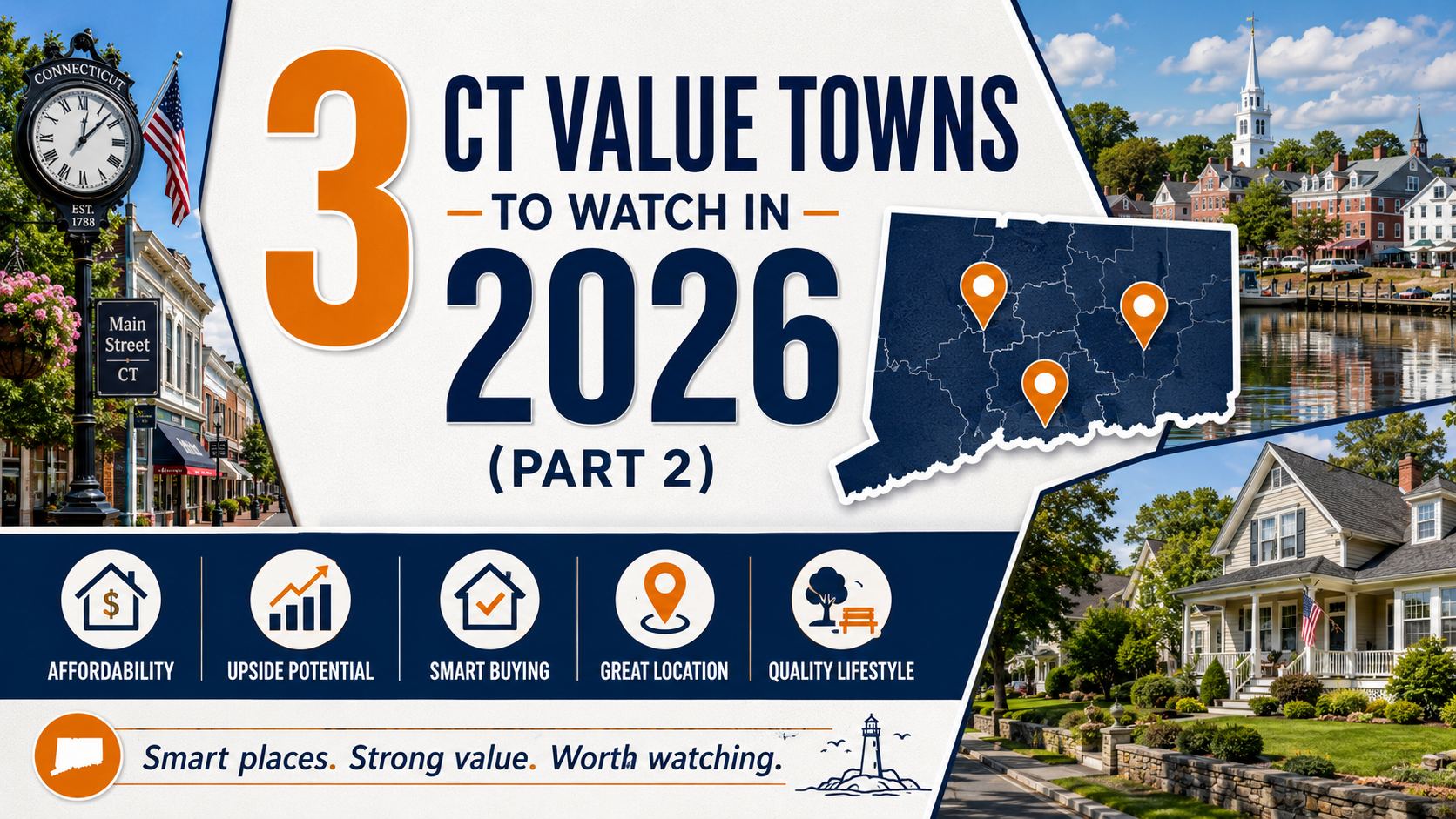
If you read Part 1, you already know the core problem with Connecticut real estate: the state isn't expensive because buyers are reckless. It's expensive because too many people are chasing the same towns at the same time. When demand stacks up in a few familiar places, competition gets ugly fast.
So today we're talking about Bristol, Naugatuck, and Torrington — three practical, undervalued towns I think have real momentum heading into 2026.
To be clear, that doesn't mean every house is going to double in value, and it doesn't mean you should waive inspections or make offers sight unseen. What it means is that demand tends to arrive earlier than expected in towns like these. Let's get into it.
Town #1: Bristol
Bristol is one of the most underrated full-life towns in Connecticut — and by full-life, I mean a town where people actually live their whole lives. Their jobs are there, they shop there, they eat at the restaurants, they use the parks, they have events and youth sports and everyday errands. Bristol functions. It doesn't rely on being charming or trendy. It relies on being usable — and in 2026, usability is more valuable than ever.
The insight buyers miss
A lot of buyers are tired. Tired of stretching just to say they live somewhere impressive. Tired of competing over the same house in the same "approved" town. They want a place where daily life works, and Bristol delivers that in a way people consistently underestimate.
Spillover demand
When surrounding towns get competitive, buyers expand their search radius and start asking, "Where can we still buy a normal house without it feeling insane?" Bristol catches that demand because it has real infrastructure — good roads, services, retail, and access that makes sense. It can absorb buyers without straining at the seams.
Here's the unexpected part: Bristol doesn't need to get hot online to get more competitive in real life. Most markets don't change because the internet says so. They change because buyers get priced out nearby, get practical, and practical buyers don't care whether a town is trendy — they care whether they can win a house and live the life they want.
Housing variety compounds demand
Bristol has options for first-time buyers, move-up buyers, downsizers, and even investors. When a town appeals to multiple buyer types at once, demand compounds — it's not riding one narrow wave, so pressure builds quietly.
Where buyers mess up
They treat Bristol as one experience. It isn't. There are pockets that feel suburban and quiet, pockets that feel busier and more active, and pockets where you need to be realistic. The smart buyer doesn't ask "Is Bristol good?" They ask "Which part of Bristol makes sense for me and how I live?"
And here's a boring-sounding insight that can make you money: normal houses are about to get more competitive than the fancy ones. A lot of people aren't chasing dream kitchens anymore — they're chasing a payment that lets them sleep at night, take their vacation, and afford a new car. That means ranches, capes, and colonials with good bones — even with a dated kitchen — could be the hottest inventory in town.
In prestige towns, buyers get emotional and overpay for the name. In towns like Bristol, buyers are more rational, and that tends to create steady appreciation rather than wild mood swings. Boring is profitable. Boring means stability and fewer dramatic swings.
Just remember the Connecticut basics on any home: oil heat versus gas, sewer versus septic, the age of the roof and windows, and whether it's siding or wood shake. The goal isn't to avoid every issue — it's to avoid the surprises. A dated kitchen is a project. A surprise foundation issue is a lifestyle change.
Town #2: Naugatuck
Naugatuck is one of the strongest value-corridor towns in all of Connecticut heading into 2026, and the reason is simple: access plus affordability creates demand whether people like it or not. (Credit where it's due — Mayor Hess is doing real work for the town.)
How buyers actually shop
They start with commute and lifestyle. Price comes in third — until price forces them to reorder their priorities. Naugatuck gets attractive the moment buyers realize they can still buy a house, still get where they need to go, and still live a pretty normal life without stretching to the breaking point. A nice yard, a solid house, good restaurants in town.
The thing most people don't say out loud is that Naugatuck demand rises when buyers get serious about budgeting. This is where buyers land when they stop saying "we want everything" and start saying "we want to be able to sleep at night." In a competitive market, that shift happens fast.
The power of winning
When people lose multiple offers, their psychology changes. They stop chasing perfection and start chasing progress — a house they can actually get. Naugatuck tends to attract buyers at exactly the moment they get serious.
And here's a 2026 insight: future flexibility is the new status symbol. People want a home that still works if their job changes, their family changes, or they need to support a parent later. Towns that offer access without a premium feel like a safer long-term bet, and they win those buyers.
Retention matters too. People buy in Naugatuck and stay — they build equity and don't churn quickly. That stability supports long-term value far better than hype-driven spikes ever could.
Like every town, Naugatuck's areas differ street to street, and density varies. Buyers who understand the nuance do very well; buyers who assume the town is one uniform experience end up frustrated. As always, do your own due diligence on safety through official sources, visit at different times of day, and talk to locals.
Town #3: Torrington
Torrington might have some of the best opportunity in all of Connecticut, and it's one of the value anchors of Litchfield County.
People love the idea of Litchfield County — the space, the charm, the lifestyle. But inventory is limited and prices climb fast in the towns everyone talks about, like Goshen, Washington, and Litchfield. Torrington is where buyers look when they want the county lifestyle without fighting over every listing.
A practical hub, not a postcard
Torrington has real infrastructure — shopping, services, healthcare, employment, and the ability to support day-to-day life. It's not pretending to be a postcard village. It's a practical hub, and practical hubs do well when the surrounding dream towns get out of reach.
Hybrid work changed the math
This matters more in 2026 than it did a few years ago. Buyers who no longer commute five days a week into New Haven are far more open to towns that offer more house and more land — and Torrington benefits directly. That trend isn't reversing anytime soon.
As a result, Torrington attracts multiple buyer types at once: first-time buyers, downsizers, investors, and people looking for more space. Whenever multiple groups compete for the same inventory, pressure builds — even without the town being trendy online.
The replacement-cost angle
Here's something buyers don't think about until they're in the middle of it: what would it cost to rebuild a house today? In much of Connecticut, that number is getting hard to justify. When replacement costs rise, well-kept existing homes hold value better — especially in towns where buyers can still afford to enter the market. Torrington benefits from that, because it remains a realistic entry point into a county people already know they want.
Torrington isn't for everybody, and that's fine. The mistake buyers make is assuming that because it's farther from certain job centers, it can't perform — which ignores how people actually live in 2026. Flexible schedules and remote days change the math. And like everywhere, micro-areas matter here: some neighborhoods feel very different from others, so buy intentionally.
How to Actually Use This
If you're serious about buying in Connecticut:
- Pick two towns, not six. Some buyers come to us with a list spread across the entire state. Narrow it down.
- Identify specific pockets, not vibes.
- Run the numbers honestly — taxes, commute, and the maintenance the house actually needs.
- Weigh lifestyle tradeoffs, not just list prices.
- Stop waiting for certainty. The best day to buy was yesterday; the second best is today. Real estate rewards informed action, not perfect timing.
On schools: I don't rank schools — it's personal and it changes. Use tools like GreatSchools.org (we have them on our website too), then verify directly with the district.
On safety: do your own due diligence through official data, and visit any area you've shortlisted a few times across different hours. Connecticut is a patchwork — anyone telling you otherwise is oversimplifying.
Tying the Whole Series Together
If you're looking at all six towns across Part 1 and Part 2 wondering which is right for you — that's the real question. The best town is the one that matches your commute, your budget, and your tolerance for compromise, not the one that wins an argument at the barbecue.
- Bristol works because it offers full-life functionality, catches spillover demand, and appeals to multiple buyer types.
- Naugatuck works because its access is excellent, it's affordable, and it attracts serious buyers who are done chasing and ready to win.
- Torrington works because it anchors value in a high-demand county with limited supply, and the hybrid-work shift keeps expanding its buyer pool.
None of these towns are flashy — and that's the point. Value almost never looks exciting before it becomes obvious.
Buyer and Seller Takeaways
If you're buying in a value-corridor town:
- Buy the right pocket. In Bristol, Naugatuck, and Torrington alike, street-level differences decide whether you're happy — visit in person, more than once, at different hours.
- Target solid-but-dated "normal" homes. As more buyers chase affordable payments over dream kitchens, that inventory is heating up, and cosmetics are the cheapest thing to fix.
- Factor future flexibility into the decision — a home that still works if your job or family changes is worth more than a slightly nicer one that doesn't.
- Run the Connecticut fundamentals every time: heat type, sewer vs. septic, roof, windows, siding. Inspections exist to kill surprises, not deals.
If you're selling in one of these towns:
- Buyers are actively hunting value-corridor towns right now. Lead with functionality, commute access, and affordability rather than trying to sound trendy.
- Solid-but-dated homes show and sell better with light cosmetic prep (paint, lighting) since so many buyers can't see past a dated kitchen.
- In Litchfield County, position against the pricier "name" towns — plenty of buyers want the county without the bidding war, and that's your pool.
Want Help Narrowing It Down?
This is Part 2 — if you missed Part 1, go back and read it, since these towns move as part of a bigger Connecticut market story.
If you want help figuring out which of these six towns actually fits your life, reach out. My team can build you a short list based on your commute, your must-haves, and your not-so-importants, and help you avoid the pitfalls. A plan is what it takes to win in 2026.
Dave Jones Realty Dave Jones, Broker/Owner 📞 203-910-2638 ✉️ Dave@davejonesrealty.com 🌐 www.searchallcthomes.com