May 23, 2023

The Real Reason Home Prices Don't Seem to Be Crashing In Connecticut

The Real Reason Home Prices Don't Seem to Be Crashing In Connecticut

The real estate market today is quite different from what it was just a few months ago. Mortgage rates have risen dramatically which impacts the borrowing power of home buyers. The frantic pace of the past few years has also slowed with homes staying on the market longer than we saw during the last few years.

With all these changes, many potential homebuyers are wondering when the prices will crash. In other words, when is the right time to buy.

The housing market is affected by supply and demand. With a potentially smaller buyer pool, the assumption would be that home prices would fall to attract the few buyers still looking. But prices are not reacting this way in many markets. In fact the supply of homes nationwide has stayed relatively small, which in turn has helped prices stay steady.

While it's difficult to predict the effect of more interest rate hikes on seller's behavior, homebuyers should concentrate on finding the right property for their needs rather than second guessing the market. It's always the right time to buy the perfect property. 

May 22, 2023

Showing Instructions and What They Mean In Connecticut

Showing Instructions and What They Mean In Connecticut


Making the decision to sell a home is just one of the many decisions that are made during the home selling process. Many first-time sellers assume that all listings are the same and it's just a function of picking a starting price. The fact is that there are many aspects of listing, but one of the most important is what kind of access you'll provide to the buyers and their agents.

It seems simple, right? Show the home and send an offer. But believe it or not there are many options for how you allow your home to be shown. Depending on your lifestyle and the valuables you have, the way you allow access is one way to safeguard your home. Here are some of the typical types of access:

Lockbox on Door - This allows the most access to agents. Normally accompanied by a request for a phone call. But then agents can see the home as needed.

Access with Phone Call -  In this case, the buyer agent must reach the agent or seller who will provide an unlock code for a single use.

By Appointment with Listing Agent - This asks that the buyer and seller agents coordinate so that the listing agent is in attendance.

Limited Access - This type of access often involves specific days or times, and the home is only available to see during those times.

Of course, the choice is always yours, but the more access you offer to the buyers and their agents, the better opportunity you have to get a strong offer. 


May 19, 2023

The Impact of Inflation on Mortgage Rates In Connecticut

The Impact of Inflation on Mortgage Rates In Connecticut 


If you’re reading headlines about inflation or mortgage rates, you may see something about the recent decision from the Federal Reserve (the Fed). But what does it mean for you, the housing market, and your plans to buy a home? Here’s what you need to know.

Inflation and the Housing Market

While the Fed’s working hard to lower inflation, the latest data shows that, while the number has improved some, the inflation rate is still higher than the target (2%). That played a role in the Fed's decision to raise the Federal Funds Rate last week. As Bankrate explains:


“Keeping its inflation-fighting streak alive, the Federal Reserve has raised interest rates for the 10th time in 10 meetings . . . The hikes aimed to cool an economy that was on fire after rebounding from the coronavirus recession of 2020.” 

While the Fed’s actions don’t directly dictate what happens with mortgage rates, their decisions do have an impact and contributed to the intentional cooldown in the housing market last year. 

How This Impacts You 

During times of high inflation, your everyday expenses go up. That means you’ve likely felt the pinch at the gas pump and in the grocery store. By raising the Federal Funds Rate, the Fed is actively trying to lower inflation. If the Fed is successful, it could also ultimately lead to lower mortgage rates and better homebuying affordability for you. That’s because when inflation is high, mortgage rates tend to be high. But, as inflation cools, experts say mortgage rates will likely fall.

Where Experts Think Mortgage Rates and Inflation Will Go from Here

Moving forward, both inflation and mortgage rates will continue to impact the housing market. And as Lawrence Yun, Chief Economist at the National Association of Realtors (NAR), says:


“Mortgage rates are likely to descend lower later in the year as the consumer price inflation calms down . . .” 

Mike Fratantoni, Chief Economist at the Mortgage Bankers Association (MBA), explains: 


“We continue to expect that mortgage rates will drift down over the course of the year as the economy slows . . .”

While there’s no way to say with certainty where mortgage rates will go from here, the experts think mortgage rates will trend down this year if inflation comes down too. To stay informed on the latest insights, connect with a trusted real estate advisor. They keep their pulse on what’s happening today and help you understand what the experts are projecting and how it could impact your homeownership plans.

Bottom Line

Don’t let headlines about the latest decision from the Fed confuse you. Where mortgage rates go from here depends on what happens with inflation. If inflation cools, mortgage rates should tick down as a result. Let’s connect so you have expert insights on housing market changes and what they mean for you.

May 17, 2023

Homeowners Have Incredible Equity To Leverage Right Now In Connecticut

Homeowners Have Incredible Equity To Leverage Right Now In Connecticut


Even though home prices have moderated over the last year, many homeowners still have an incredible amount of equity. But what is equity? In the simplest terms, equity is the difference between the market value of your home and the amount you owe on your mortgage. The National Association of Realtors (NAR) explains how your equity grows over time:

“Housing wealth (home equity or net worth) gains are built up through price appreciation and by paying off the mortgage.”

How Your Equity Can Help You Achieve Your Goals

The equity you build up over the years can be used to your advantage when you sell your current house and buy your next home. If you no longer have the space you need, it might be time to move into a larger home. Or it’s possible you have too much space and need something smaller. No matter the situation, your equity can be a powerful tool you can use to help you make a move in today’s market. That’s because it may be some (if not all) of what you need for your down payment on your next home.

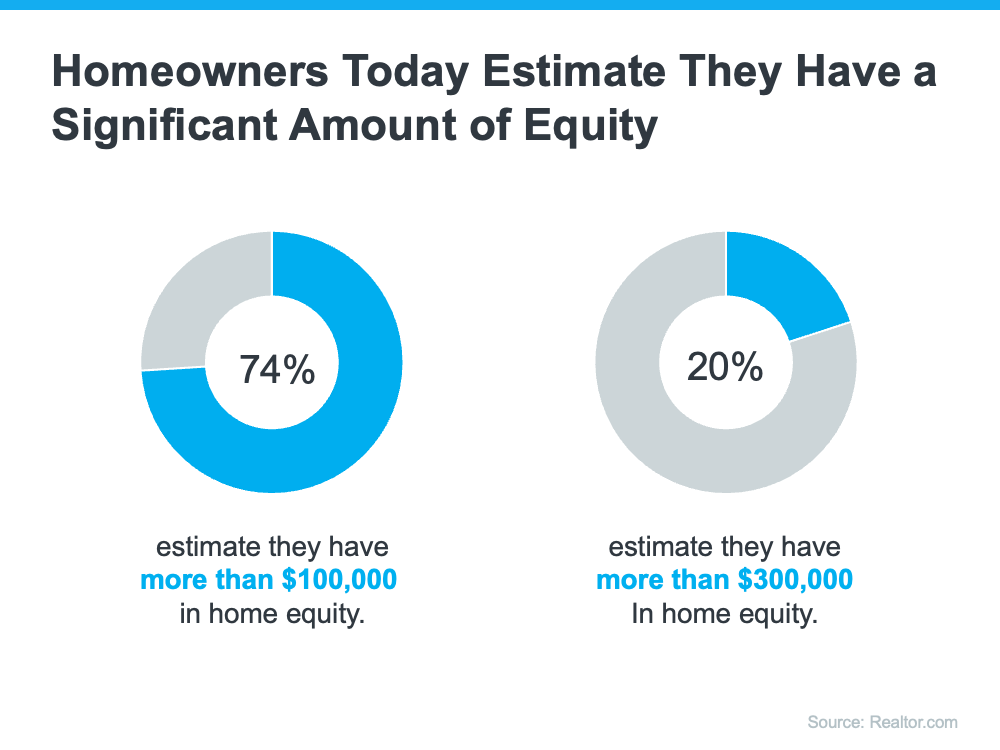
And how much equity you have may surprise you. A recent survey from Realtor.com finds many homeowners today estimate they’ve built up a significant amount of equity:

The latest data from CoreLogic helps solidify why homeowners are feeling so good about the equity they’ve likely gained over time. As Selma Hepp, Chief Economist for CoreLogic, says:

“While equity gains contracted in late 2022 due to home price declines in some regions, U.S. homeowners on average still have about $270,000 in equity, nearly $90,000 more than they had at the onset of the pandemic.”

How a Skilled Real Estate Agent Can Help

If you’re looking to leverage your equity to boost your buying power in today’s market, having a trusted agent by your side makes a difference.

A real estate professional can help you better understand the value of your home, so you’ll get a clearer picture of how much equity you likely have. As a recent article from Bankrate says:

“Hiring a skilled real estate agent can give you a realistic estimate of home prices in your area and how to price your current home. Using that figure, you can calculate how much equity you have and what your net proceeds will look like, so you can apply that money toward the down payment and closing costs of your new home.” 

Having a solid understanding of your equity is key when it comes to making decisions about buying or selling your home. A skilled agent can help you navigate the often-complicated process of selling your house and ensure the transaction goes smoothly.

Bottom Line

Today, many homeowners are sitting on a substantial amount of equity, and you may be one of them. Let’s connect so we can estimate how much equity you have and plan how you can use it toward the purchase of your next home.

Posted in Home Owner Tips
May 16, 2023

Market Signal to Watch For in a Real Estate In Connecticut

Market Signal to Watch For in Real Estate


The housing market has been periods of ups and downs, buyer's markets and seller's markets, yet the frenetic pace and swings since the start of the pandemic has had everyone on edge. Now that interest rates have climbed back to more "normal" levels, those in the market are wondering, "what's next"?

For anyone interested in buying or selling real estate, it can feel like a guessing game. Is it the right time to sell? Can I get the best price? Should I buy a home this spring? Will interest rates go up, or down? It can feel overwhelming.

Yet, there are signs that can help consumers make the right decision for themselves and their families. As spring season starts, there are signs that indicate a strong real estate market. New mortgage applications are rising again. Indicating buyers are starting to look at their options.

After a long period of rising home mortgage rates, the last few weeks have seen a small downturn and buyers are moving to lock in these lower rates. This is also good news for sellers. With more buyers in the market, they can expect better activity and higher home prices.


The key for both buyers and sellers is to keep their expectations reasonable. Experts do not expect a large rush of either buyers or sellers flooding the market, so this sprint looks like an opportunity to slow down a bit, weigh options, and make a solid transaction without the pressure. 

May 15, 2023

6 Tips for a Sustainable Home In Connecticut

6 Tips for a Sustainable Home In Connecticut

Creating a sustainable environment is on the top of everyone's mind these days. From Disney to Poland, policies that save energy and resources are important ways to reduce waste and help the planet. Your home can be part of this effort as well. With a few small changes, you can create a more sustainable home.

6 Tips for a Sustainable Home


1. Solar Panels - Using solar panels to generate electricity is a great way to save money on your energy bill and reduce your carbon footprint.

2. Switch to LED Lighting - LED bulbs use significantly less energy than traditional incandescent bulbs and last much longer. Making the switch can save you 80% of your typical lighting cost.

3. Install a Programmable Thermostat - Smart home products can help manage energy use. A programmable thermostat can save money on heating and cooling bills by automatically reducing use when not needed.

4. Reduce Water Consumption - You can save water by simple adjustments. High-efficiency appliances and low-flow showers are quick changes that don't affect your lifestyle.

5. Use Eco-Friendly Cleaning Products - The market is flooded with green alternatives to the harsh chemical cleaners we're used to. These eco-friendly cleaning products are better for your health as well as the planet.

6. Energy-Efficient Windows - Installing energy efficient windows can also help lower heating and cooling costs. They also reduce noise pollution and improve indoor air quality.

By making a few changes, you can create a more sustainable, energy-efficient home. Save money and reduce the negative impact on the environment by trying these easy ideas to lower your carbon footprint.


May 12, 2023

Reasons To Sell Your House Today In Connecticut

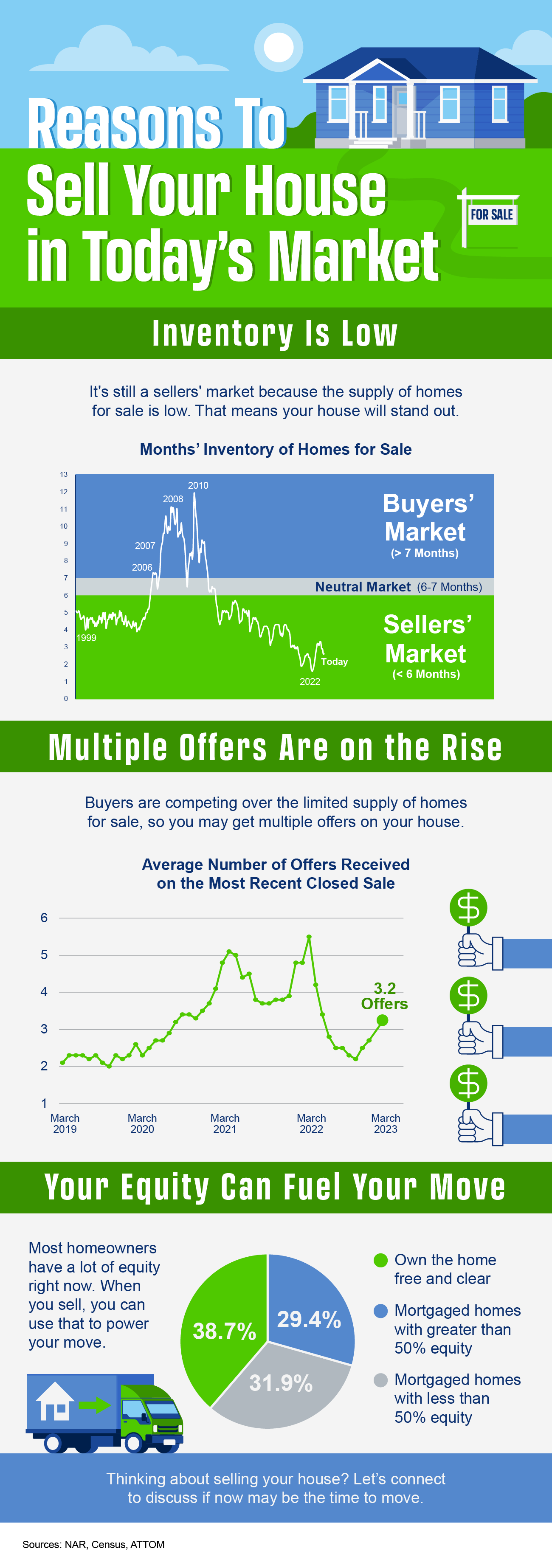
Reasons To Sell Your House Today [INFOGRAPHIC]


Some Highlights

  • Not sure if selling your house is the right move today? You should know there are a number of reasons it still makes sense to sell now.
  • Your house will stand out because inventory is low. That’s why the number of offers on recently sold homes is on the rise. And most homeowners have a lot of equity that can fuel a move.
  • If you’re thinking about selling your house, let’s connect to discuss if now may be the time to move.  
Posted in CT Seller Tips
May 11, 2023

How Homeowners Win When They Downsize In Connecticut

How Homeowners Win When They Downsize In Connecticut


Downsizing has long been a popular option when homeowners reach retirement age. But there are plenty of other life changes that could make downsizing worthwhile. Homeowners who have experienced a change in their lives or no longer feel like their house fits their needs may benefit from downsizing too. U.S. News explains:

“Downsizing is somewhat common among older people and retirees who no longer have children living at home. But these days, younger people are also looking to downsize to save money on housing . . .”

And when inflation has made most things significantly more expensive, saving money where you can has a lot of appeal. So, if you’re thinking about ways to budget differently, it could be worthwhile to take your home into consideration.

When you think about cutting down on your spending, odds are you think of frequent purchases, like groceries and other goods. But when you downsize your house, you often end up downsizing the bills that come with it, like your mortgage payment, energy costs, and maintenance requirements. Realtor.com shares:

“A smaller home typically means lower bills and less upkeep. Then there’s the potential windfall that comes from selling your larger home and buying something smaller.”

That windfall is thanks to your home equity. If you’ve been in your house for a while, odds are you’ve developed a considerable amount of equity. Your home equity is an asset you can use to help you buy a home that better suits your needs today.

And when you’re ready to make a move, your team of real estate experts will be your guides through every step of the process. That includes setting the right price for your house when you sell, finding the best location and size for your next home, and understanding what you can afford at today’s mortgage rate.

What This Means for You

If you’re thinking about downsizing, ask yourself these questions:

  • Do the original reasons I bought my current house still stand, or have my needs changed since then?
  • Do I really need and want the space I have right now, or could somewhere smaller be a better fit?
  • What are my housing expenses right now, and how much do I want to try to save by downsizing?

Once you know the answers to these questions, meet with a real estate advisor to get an answer to this one: What are my options in the market right now? A local housing market professional can walk you through how much equity you have in your house and how it positions you to win when you downsize.

Bottom Line

If you’re looking to save money, downsizing your home could be a great help toward your goal. Let’s connect to talk about your goals in the housing market this year.

Posted in Home Owner Tips
May 10, 2023

Buyer Activity Is Up Despite Higher Morgage Rates In Connecticut

Buyer Activity Is Up Despite Higher Mortgage Rates In Connecticut


If you’re a homeowner thinking about making a move, you may wonder if it’s still a good time to sell your house. Here’s the good news. Even with higher mortgage rates, buyer traffic is actually picking up speed.

Data from the latest ShowingTime Showing Index, which is a measure of buyers actively touring homes, helps paint the picture of how much buyer demand has increased in recent months (see graph below):

As the graph shows, the first two months of 2023 saw a noticeable increase in buyer traffic. That’s likely because the limited number of homes for sale kept shoppers looking for homes even during colder months.

To help tell the story of why the latest report is significant, let’s compare foot traffic this February with each February for the last six years (see graph below). It shows this was one of the best Februarys for buyer activity we’ve seen in recent memory.

In the last six years, we saw the most February buyer traffic in 2021 and 2022 (shown in green above), but those years were highly unusual for the housing market. So, if we compare February 2023 with the more normal, pre-pandemic years, data shows this year still marks a clear rise in buyer activity.

The uptick in buyer traffic is even more noteworthy considering the increase in mortgage rates this February. The Freddie Mac 30-year fixed mortgage rate rose from 6.09% during the week of February 2nd to 6.50% in the week of February 23rd. But even with higher rates, more buyers were looking for a home.

Jeff Tucker, Senior Economist at Zillow, says the increased buyer activity could continue:

“More buyers will keep coming out of the woodwork. We always see a seasonal uptick in home shoppers in March and April . . .”

If you’re looking to sell your house, seeing buyers still active in the market this year should be encouraging. It’s a sign buyers are out there and could be looking for a home just like yours. Working with a real estate professional to list your house now will help you get your home in front of eager buyers today.

Bottom Line

Rising foot traffic is a bright spot for this year’s housing market and indicates that buyers are looking to purchase this year, even with higher mortgage rates. If you’re ready to sell your house, let’s connect.

Posted in CT Buyer Tips
May 9, 2023

A Recession Doesn't Equal a Housing Crisis In Connecticut

A Recession Doesn’t Equal a Housing Crisis In Connecticut


Everywhere you look, people are talking about a potential recession. And if you’re planning to buy or sell a house, this may leave you wondering if your plans are still a wise move. To help ease your mind, experts are saying that if we do officially enter a recession, it’ll be mild and short. As the Federal Reserve explained in their March meeting:

“. . . the staff’s projection at the time of the March meeting included a mild recession starting later this year, with a recovery over the subsequent two years.” 

While a recession may be on the horizon, it won’t be one for the housing market record books like the crash in 2008. What we have to remember is that a recession doesn’t always lead to a housing crisis.

To prove it, let’s look at the historical data of what happened in real estate during previous recessions. That way you know why you shouldn’t be afraid of what a recession could mean for the housing market today.  

A Recession Doesn’t Mean Falling Home Prices 

To show that home prices don’t fall every time there’s a recession, it helps to turn to historical data. As the graph below illustrates, looking at recessions going all the way back to 1980, home prices appreciated in four of the last six of them. So historically, when the economy slows down, it doesn’t mean home values will always fall.

Most people remember the housing crisis in 2008 (the larger of the two red bars in the graph above) and think another recession will be a repeat of what happened to housing then. But today’s housing market isn’t about to crash because the fundamentals of the market are different than they were in 2008. Back then, one of the big reasons why prices fell was because there was a surplus of homes for sale at the same time distressed properties flooded the market. Today, the number of homes for sale is low, so while home prices may see slight declines in some areas and slight gains in others, a crash simply isn’t in the cards. 

A Recession Means Falling Mortgage Rates

What a recession really means for the housing market is falling mortgage rates. As the graph below shows, historically, each time the economy slowed down, mortgage rates decreased.

Bankrate explains mortgage rates typically fall during an economic slowdown:

“During a traditional recession, the Fed will usually lower interest rates. This creates an incentive for people to spend money and stimulate the economy. It also typically leads to more affordable mortgage rates, which leads to more opportunity for homebuyers.” 

This year, mortgage rates have been quite volatile as they’ve responded to high inflation. The 30-year fixed mortgage rate has hovered between roughly 6-7%, and that’s impacted affordability for many potential homebuyers. 

But, if there is a recession, history tells us mortgage rates may fall below that threshold, even though the days of 3% are behind us.

Bottom Line

You don’t need to fear what a recession means for the housing market. If we do have a recession, experts say it will be mild and short, and history shows it also means mortgage rates go down.

Posted in Events