


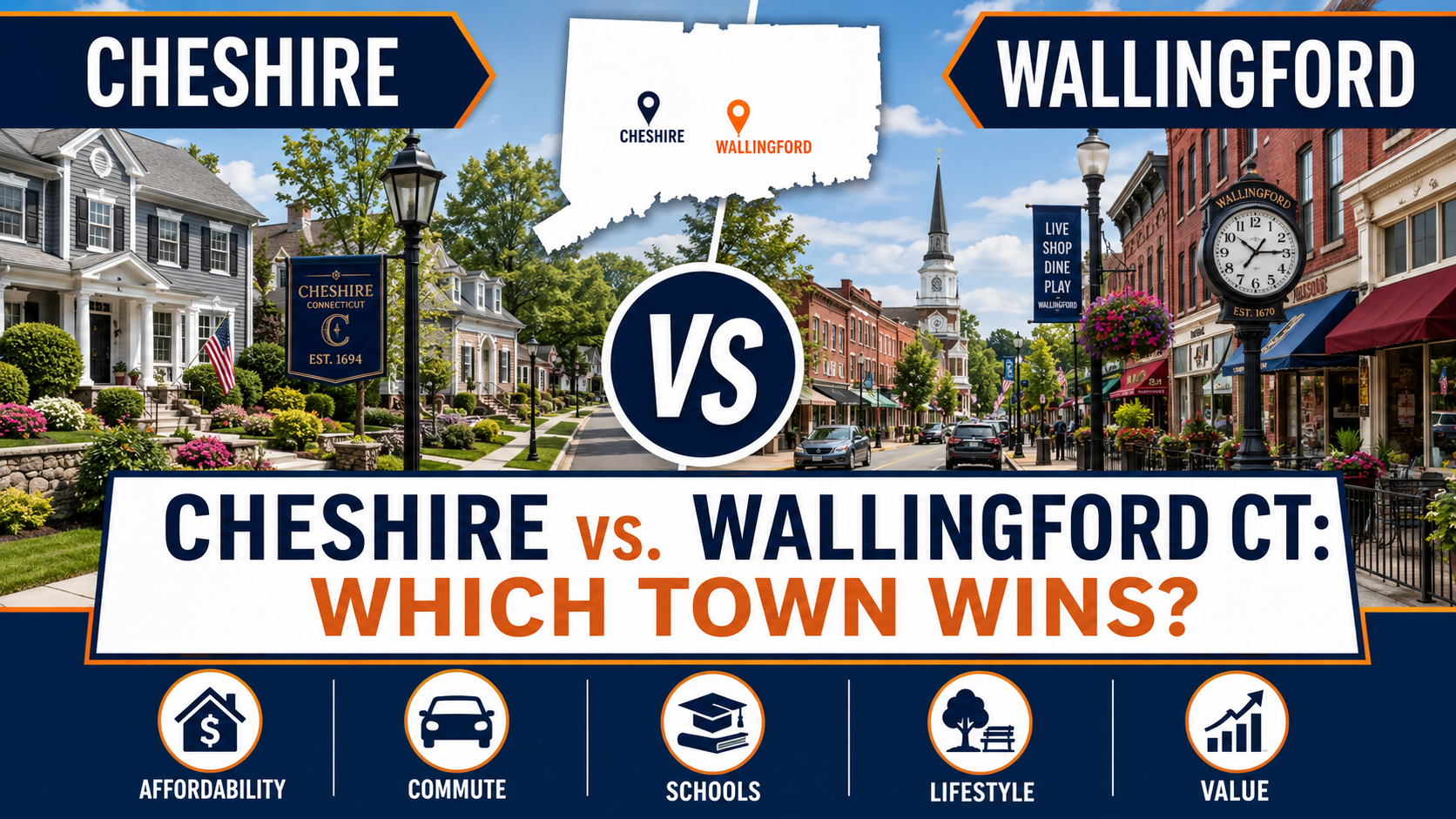
 Cheshire or Wallingford? If you're looking in New Haven County, you've probably already narrowed it to these two — same general location, similar price ranges, same buyer pool. But here's what most people miss: these towns are not interchangeable.
I'm Dave Jones, broker/owner of Dave Jones Realty and a lifelong Connecticut resident. I'm scoring 10 categories, each worth half a star — win the category, get the half-star; if both are strong, they split it — for a final rating out of five.
A quick note on the numbers: these reflect 2025 full-year Smart MLS data and current mill rates. Markets shift, so treat these as a snapshot and reach out for current figures.
Round 1: Entry Price
Wallingford's 2025 median was about $279,900; Cheshire's was about $385,000 — a roughly $105,000 gap, making Wallingford about 27% cheaper. For buyers on tight budgets or watching a monthly payment ceiling, that difference is massive — it can be the line between qualifying comfortably and stretching too far.
Wallingford's lower price opens it to a broader range of buyers: first-timers moving up from condos, and people relocating to Connecticut who want space without Fairfield County pricing. Cheshire's higher price reflects what you get — larger lots, a stronger school reputation, and a more established suburban feel. But if the question is simply "where can I buy for less," it's Wallingford, and it's not close.
Wallingford — half a star.
Round 2: Property Taxes
Here's the category that changes the math, and one most buyers don't calculate until they're deep in the process.
Cheshire's mill rate is 29.74; Wallingford's is 24.12 — about a 19% difference. Combine that lower rate with Wallingford's lower purchase price, and the monthly advantage compounds.
In real dollars (Connecticut assessments run about 70% of market): on two homes each assessed at $300,000, Cheshire runs about $8,922 a year and Wallingford about $7,236 — roughly $1,686 in annual savings, or about $50,000 over a 30-year mortgage, before you even factor in that the Wallingford home cost $105,000 less to buy. You're paying less to get in and less every year. That's what makes Wallingford a serious value play for buyers who run the math.
Wallingford — half a star.
Wallingford's off to a strong start — let's see if Cheshire catches up.
Round 3: Market Momentum
Cheshire in 2025 had about 319 closed sales at an average of $385,000 (up 6.4%), roughly 31 days on market, and 101.6% of list. A stable, predictable market with steadily climbing values.
Wallingford had about 381 closed sales at $279,900 (up 8.5%), just 15 days on market, and 103.1% of list. The market's moving fast — homes sell in about two weeks and buyers are bidding over asking.
Both are strong and both are appreciating, but Wallingford's volume is higher, its days on market are half Cheshire's, and its list-to-sale ratio is higher.
Wallingford — half a star.
Round 4: The Buying Experience
What does it feel like to actually compete in each?
Cheshire's ~31 days on market makes for a healthy, active market where you have time to see a home, go home, talk it over, and come back for a second look. There's competition, but it's not frantic.
Wallingford's ~15 days is faster — homes go quickly, buyers compete aggressively, and offers run about 3% over asking. If you see something you like, you need to be ready to decide.
For buyers who want time and less pressure, Cheshire offers the calmer, more deliberate experience.
Cheshire — half a star.
(If you're seriously looking in New Haven County — Cheshire, Wallingford, or anywhere between — my team is in these towns every day. You can browse every listing in the state on our site, and we'll help point you in the right direction.)
Round 5: Commute and Daily Access
Both sit on Route 15 (the Merritt/Wilbur Cross) and close to I-91, with excellent highway access — New Haven in 15–20 minutes, Hartford in about 30. For highway commuters, both deliver.
But here's Wallingford's major advantage: Metro-North rail access. Wallingford has a station on the Hartford Line, letting you train to New Haven, Hartford, or down to New York via the New Haven Line. Cheshire has no rail — you're driving, which is fine for most buyers, but for anyone who prioritizes rail (especially relocating New Yorkers), it can be a deal-breaker.
Wallingford — half a star.
Round 6: Schools and Perception
As always, I don't rank schools — use GreatSchools.org (also available on our site when you view a property) and enter the exact address. But perception drives demand, and in New Haven County, Cheshire has the stronger school reputation.
Cheshire is known as one of the top public school systems in the region, and families specifically seek it out for that — the reputation for academic quality is well established and drives consistent demand. Wallingford has solid schools that serve its community well, but when families compare the two side by side, Cheshire typically comes out ahead in the ratings.
Cheshire — half a star.
Round 7: Lifestyle and Daily Feel
Cheshire feels like a classic New England suburb — a town green, local shops, parks, trails, good restaurants, and a cohesive, established, quiet residential vibe.
Wallingford feels more sprawling and commercial — more retail, more restaurants, more shopping centers, with Route 5 running through the center. You get more conveniences nearby, but the overall feel is less quaint and more functional.
Neither is better; it depends on what you value — Cheshire's charm and cohesion, or Wallingford's convenience and variety. Both offer a good suburban lifestyle.
Split — both get half a star.
Round 8: Amenities and Things to Do
Cheshire has parks, trails, local dining, and community events — Mixville Park, Lock 12 Historical Park, farmers markets. It has charm and green space, but it isn't packed with amenities.
Wallingford has more: shopping along Route 5, a wider variety of restaurants, Wharton Brook State Park, the community pool, and the Choate Rosemary Hall campus bringing cultural events to town. There's simply more going on.
Wallingford — half a star.
Round 9: Space and Outdoor Feel
Cheshire offers larger lots on average — half-acre to one-acre properties are easy to find — with more separation from neighbors and a suburban-rural character for buyers who want breathing room.
Wallingford has good-sized lots too, but the town is denser overall, with more homes on quarter- to half-acre parcels and less variety in larger lots.
For maximum space, Cheshire has the edge.
Cheshire — half a star.
Round 10: Resale Strength
Both are New Haven County suburbs with great schools and strong highway access, both attract long-term owners, and both have solid fundamentals.
Cheshire's market is stable with steadily climbing values, and its school reputation drives consistent demand. Wallingford's 2025 median rose about 8.5% — faster appreciation than Cheshire — in a hot, fast-moving market, and its value proposition (lower price, lower taxes, rail access) creates strong demand.
Both have great resale, but Wallingford's faster appreciation and momentum give it the edge.
Wallingford — half a star.
The Final Score
Wallingford wins this matchup fairly decisively — on entry price, property taxes, market momentum, commute access, amenities, and resale strength. Every one of those points to the same thing: Wallingford is a genuine value play.
Cheshire wins on buying experience, schools and perception, and space, and ties on lifestyle. Its strengths are built on quality, reputation, and a more relaxed suburban feel.
The wrong move is buying in Wallingford and later wishing you were in Cheshire because the school perception gap mattered more than you thought. The equally wrong move is buying in Cheshire and feeling the monthly payment pinch because you didn't calculate the tax difference properly. Figure out what you actually need — not what sounds nice — and pick the town that delivers it.
Honestly, you're not going wrong with either. I have friends in both towns who are passionate about where they live. It comes down to what fits you.
Buyer and Seller Takeaways
If you're buying between these two:
- Run the full picture: Wallingford's lower price and lower mill rate stack up to real long-term savings, while Cheshire's premium buys larger lots and school reputation. Decide which you're actually paying for.
- If rail matters — especially relocating from New York — Wallingford's Metro-North station is a genuine differentiator Cheshire can't match.
- If schools are the priority, weigh Cheshire's stronger perception, but verify by exact address on GreatSchools rather than town reputation alone.
- Match your pace to the market: Wallingford moves in ~2 weeks (be ready), Cheshire gives you a bit more room to deliberate.
If you're selling in either town:
- In Wallingford, lead with the value stack — price, low mill rate, and rail access — to reach the broad, fast-moving buyer pool.
- In Cheshire, lean on school reputation, larger lots, and the established suburban feel that command a premium.
- In both, price to current comparable sales; Wallingford's faster appreciation means last quarter's numbers move quickly.
Which Town Fits You?
Both are excellent New Haven County towns — one's a value-and-momentum play, the other's a quality-and-reputation play. The right answer depends entirely on your budget, your commute, and what you actually need.
If you're weighing Cheshire, Wallingford, or anywhere in New Haven County, reach out and my team will help you get it right the first time.
Dave Jones Realty Dave Jones, Broker/Owner 📞 203-910-2638 ✉️ Dave@davejonesrealty.com 🌐 www.searchallcthomes.com
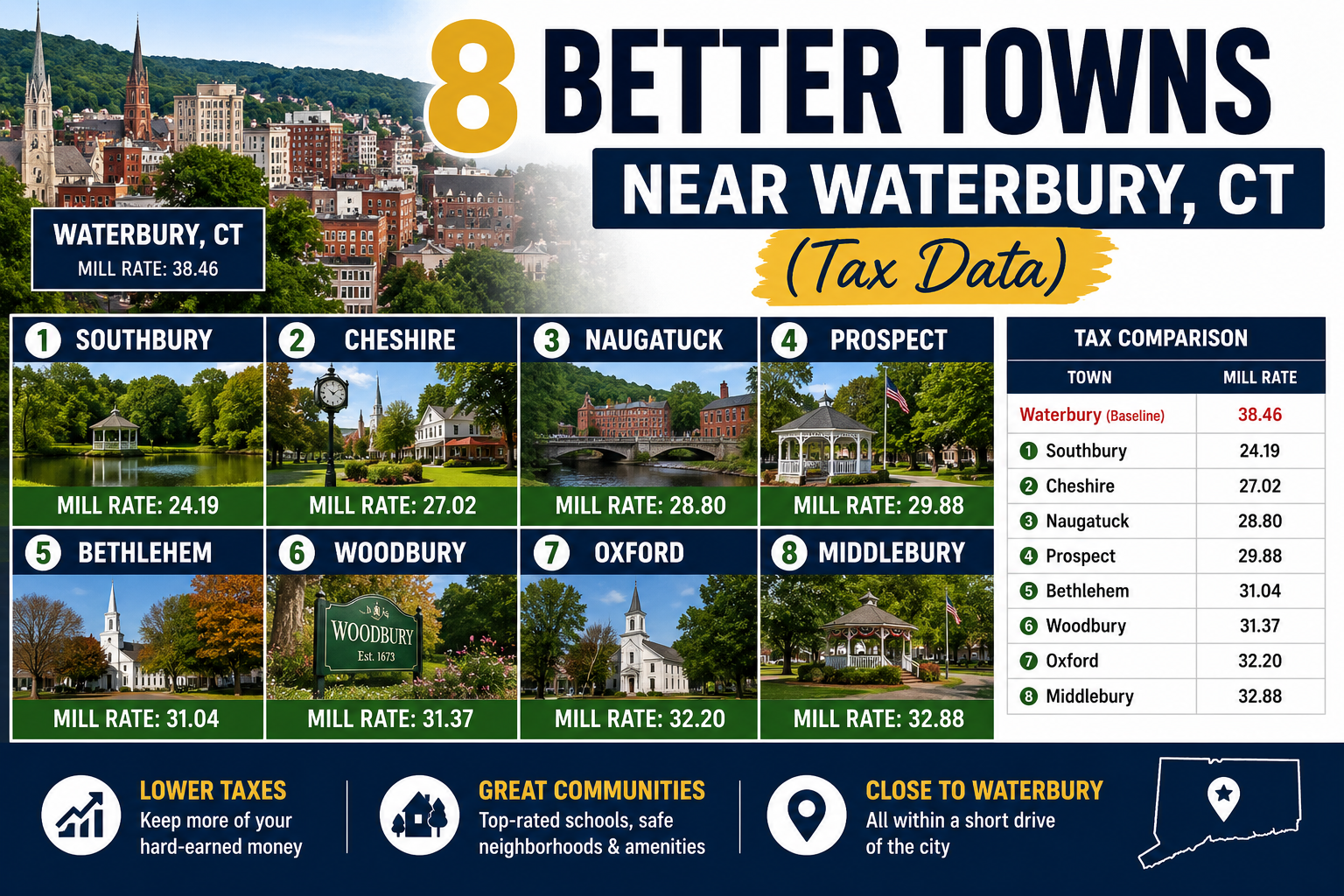 Thinking about Waterbury? Before you commit, hear me out. I'm not here to roast Waterbury — it's got grit, history, and a real blue-collar backbone I respect. But there are towns within 10 to 25 minutes of Waterbury that can give you more house, stronger equity, lower taxes, and in some cases a lifestyle that makes you wonder why you looked anywhere else.
 Tens of thousands of people left New York last year, and a large share of them landed here in Connecticut. So which towns are they choosing — and, more importantly, why?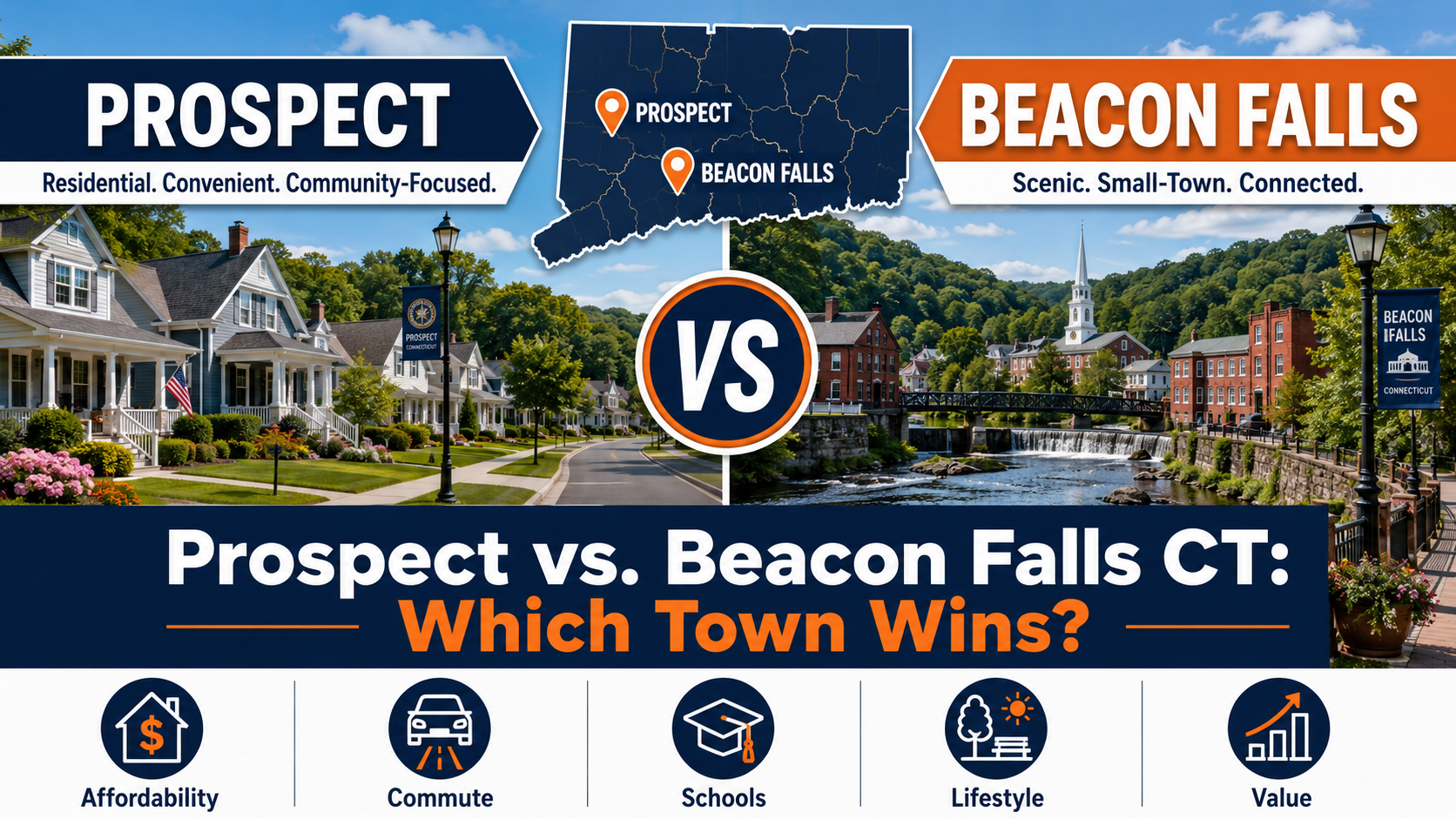
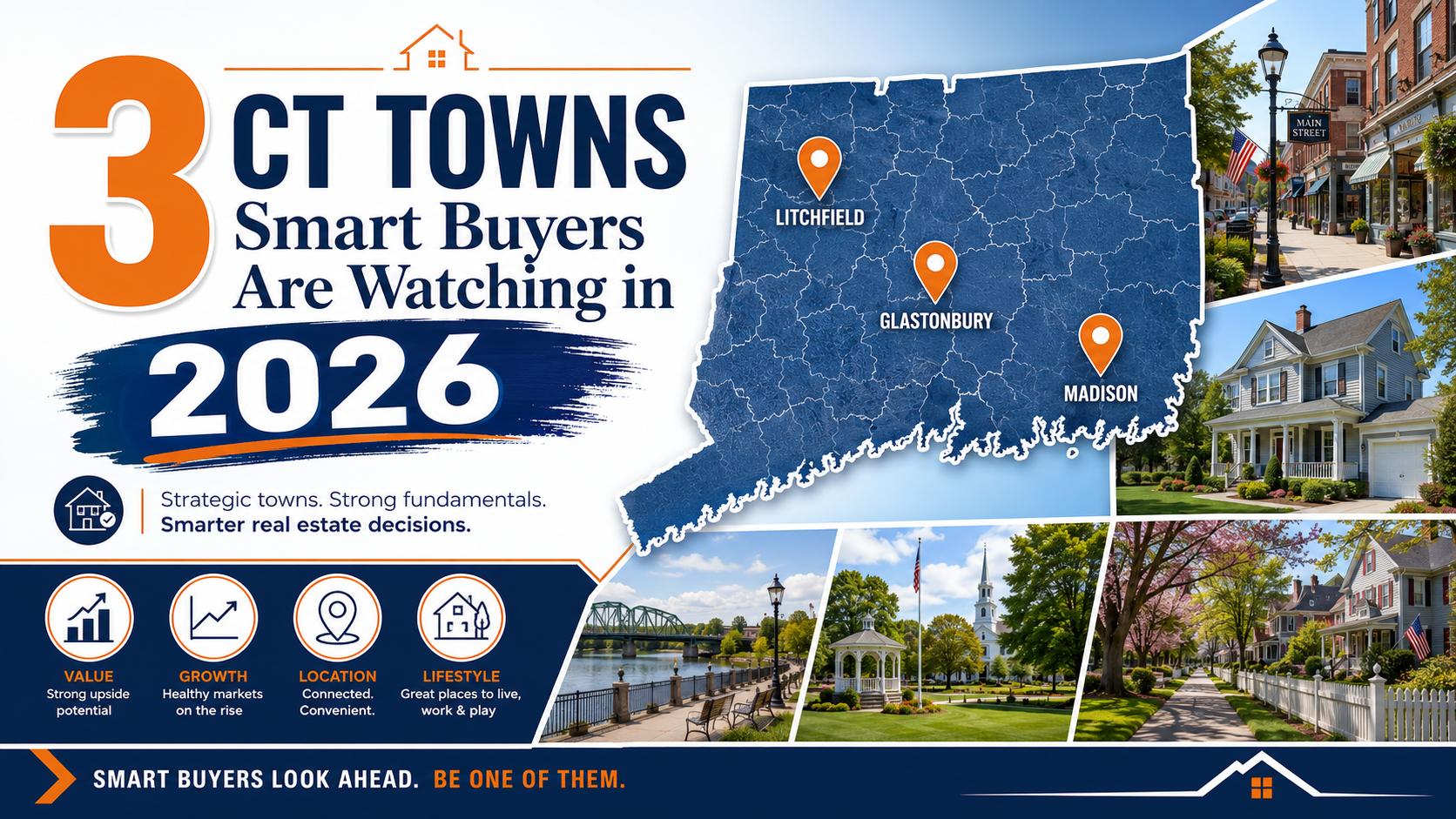
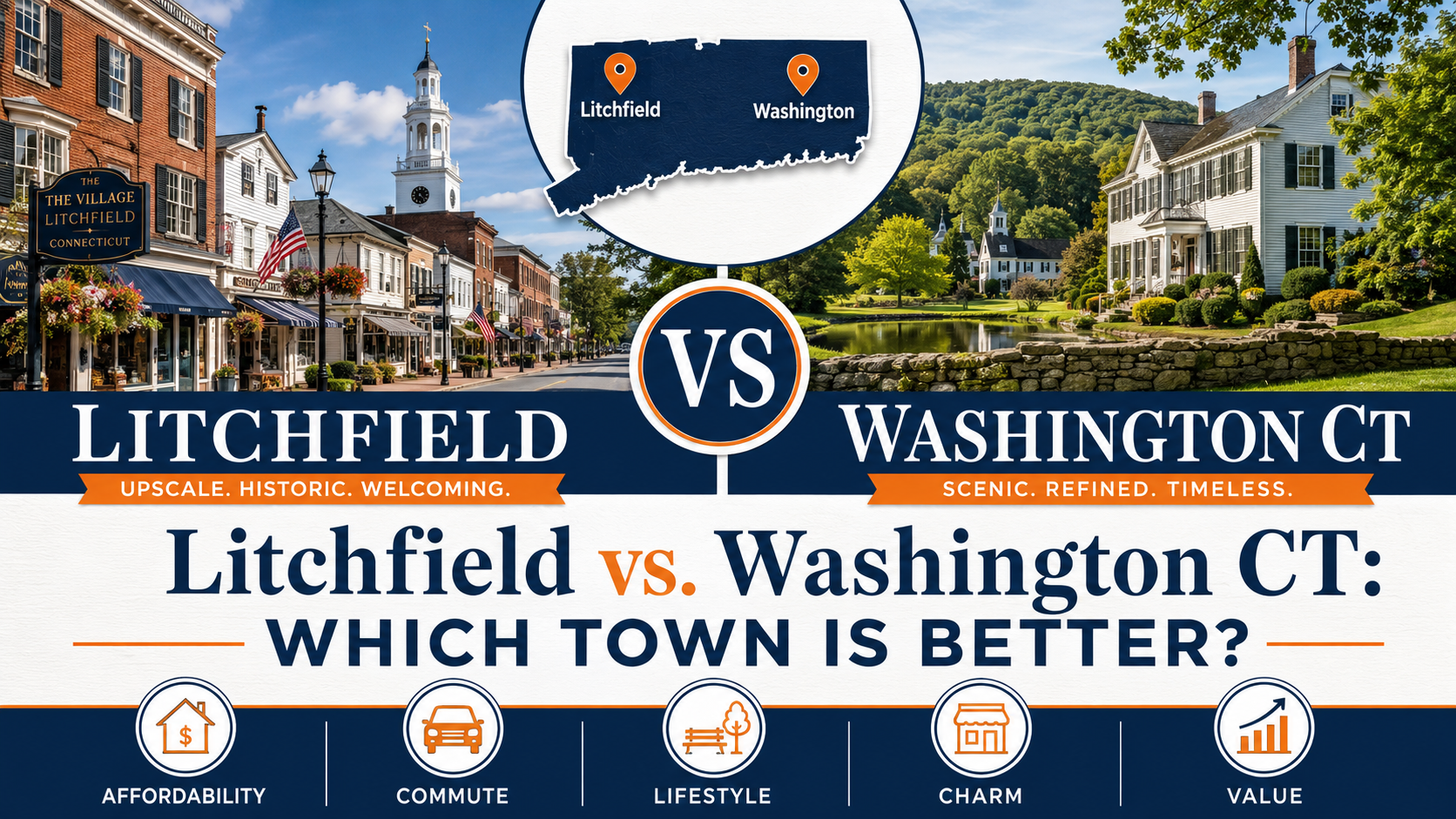 If you're deciding between Litchfield and Washington, Connecticut, you're choosing between two of the most desirable towns in all of Litchfield County. On the surface they can seem similar — both historic, both beautiful, both offering that classic New England small-town charm people move to Connecticut for.
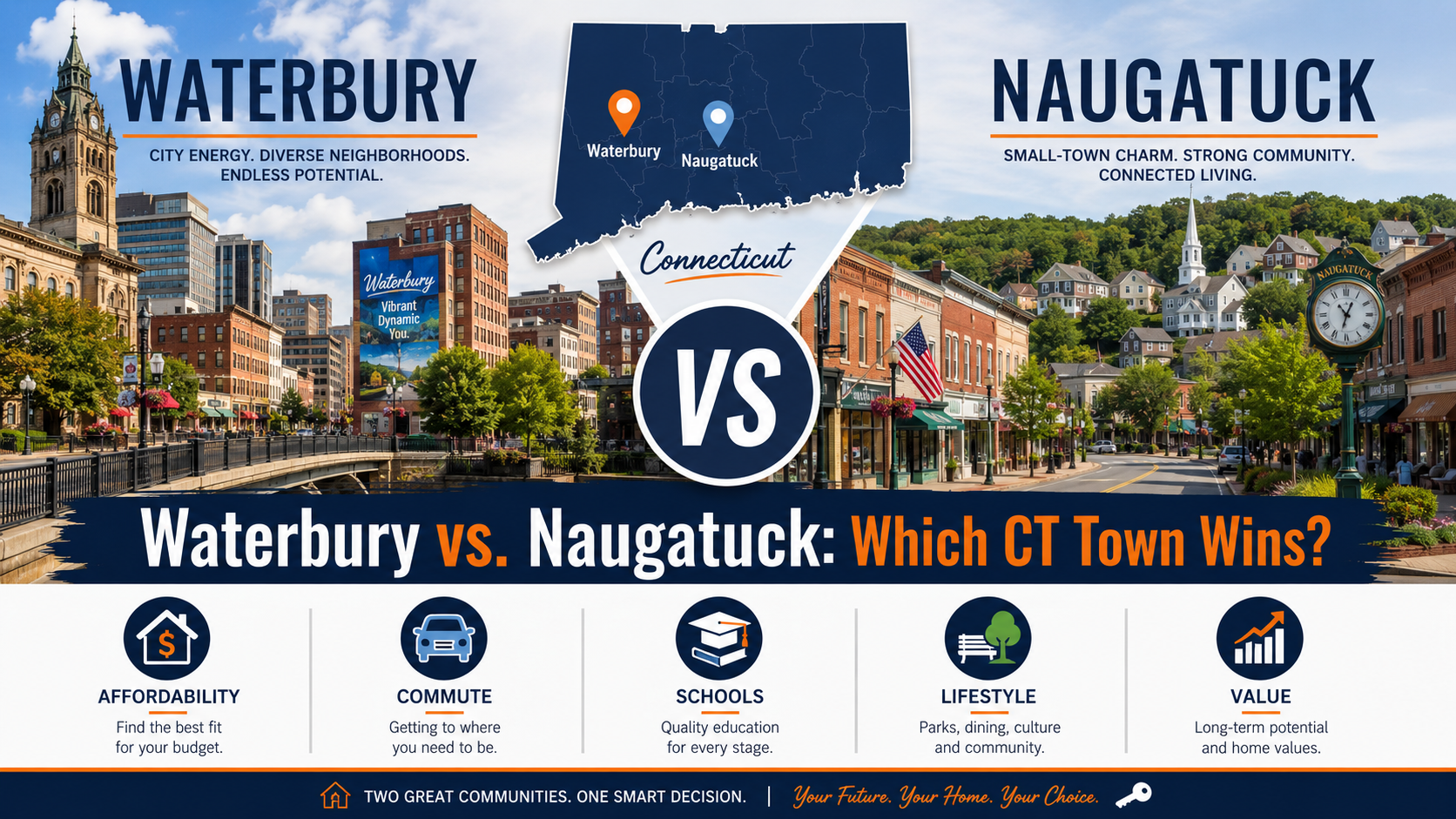 If you're trying to decide between Waterbury and Naugatuck, you're facing one of the most common choices buyers are making in this part of Connecticut right now — especially anyone trying to balance affordability with a smart long-term move.