July 28, 2026

Moving to Connecticut: Real Pros & Cons for 2026 Buyers

Connecticut Real Estate

If you've spent any time on YouTube researching a move to Connecticut, you've probably noticed something: a lot of the "advice" out there comes from people who drove through the state once on their way to Boston or New York and now consider themselves experts.

I'm Dave Jones. I've lived in Connecticut my entire life, raised my family here, built my real estate business here, and I help people relocate to this state every single week. So consider this the insider version — the pros, the cons, and the things nobody tells you until you're already signing a contract.

Pro: Connecticut Is More Affordable Than People Assume

Compared to New York, New Jersey, and Massachusetts, Connecticut is often a pleasant surprise. Most people picture the entire Northeast as outrageously expensive, but large parts of our state are still very reasonable, especially once you cross out of the priciest shoreline towns.

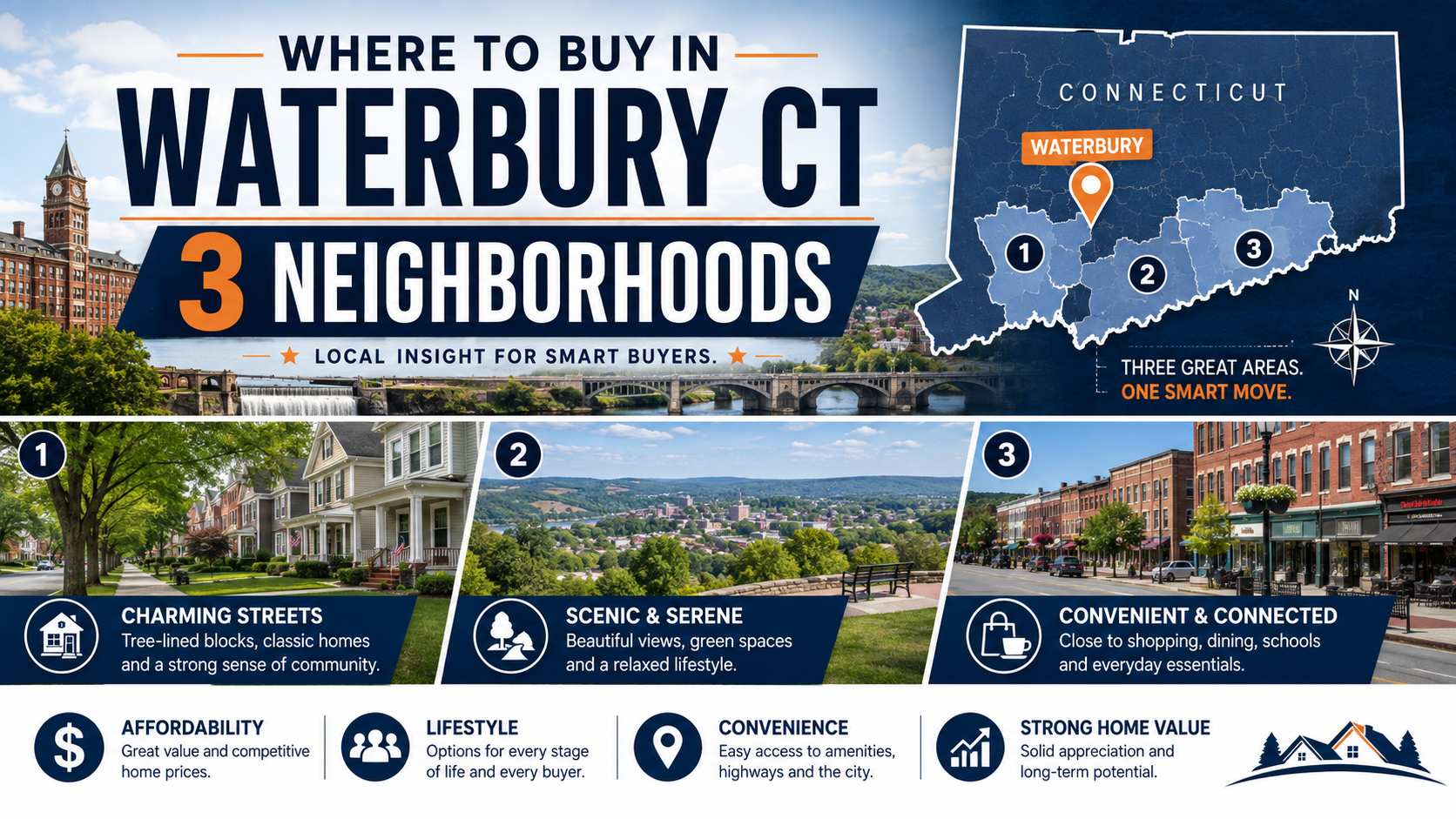
In communities like Prospect, Southington, Bristol, Torrington, and Waterbury, you can find solid single-family homes for considerably less than comparable properties just over the state line.

What really surprises people, though, is how much house you actually get for the money. Connecticut's housing stock tends to be older, sturdier, and sitting on bigger lots than what you'll find in many faster-growing states. Real hardwood floors, mature landscaping, full basements — these are standard features here, not upgrades you pay extra for.

As of late 2025 heading into 2026, the median sale price statewide is hovering around $360,000, depending on the county. That number shocks a lot of relocation clients who assumed they'd need half a million dollars just to get a mailbox in Connecticut.

Day-to-day costs — groceries, services, gas — are generally moderate as well. Property taxes are a different story, and I'll get to that honestly in the cons section, but the overall picture is more affordable than the internet gives us credit for.

Pro: A Genuinely Strong Job Market

Connecticut punches above its weight on employment. We've got major insurance companies, healthcare systems, aerospace and defense manufacturers, top universities, biotech firms, and a deep bench of small businesses in nearly every town.

Hartford is known as the insurance capital of the world. Cheshire has a reputation in the betting industry. Fairfield County is loaded with corporate headquarters and financial services firms. New Haven has Yale and one of the best medical corridors in the country.

Here's something most relocation videos skip entirely: Connecticut has one of the highest concentrations of engineers per capita in the country, thanks to companies like Sikorsky, Pratt & Whitney, and Electric Boat. A lot of new residents move here expecting a sleepy colonial state and then find out their neighbor designs submarines, helicopters, or jet engines.

Heading into the 2026 spring market, statewide unemployment has been sitting near historic lows — around 4% — with average household income near $80,000. Add in the explosion of remote and hybrid work since 2020, and Connecticut has quietly become a landing zone for people earning New York or Boston salaries while paying Connecticut home prices. That trend isn't slowing down.

If you're relocating for work, my team helps people figure out which towns line up best with their industry, where the real commuting hubs are, and which back roads locals use to dodge the worst traffic. That kind of guidance matters more here than people expect.

Pro: Real Seasons and Genuine Outdoor Access

Connecticut gives you four actual seasons. Spring is beautiful, summers sit comfortably in the 80s, and fall genuinely looks like a Hallmark movie. Winter is the toughest sell, but it builds character — and it's also milder than most newcomers expect.

That's because Connecticut is a coastal state, and the Atlantic Ocean acts as a natural temperature regulator. You'll get cold, but it's not Minnesota cold. You can golf in April, swim from June through September, apple-pick in October, and still complain about shoveling in January.

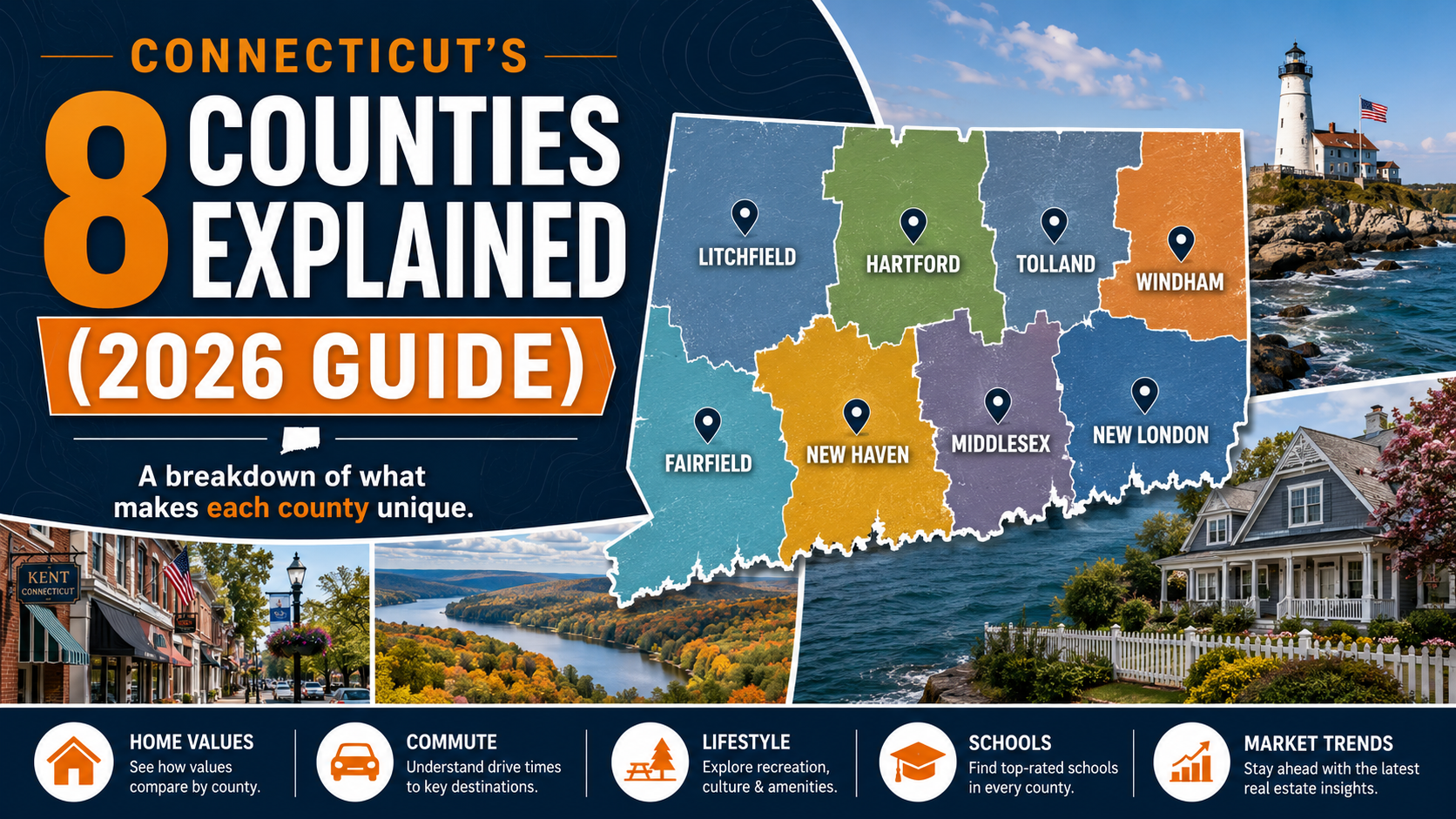
We've got beaches on Long Island Sound, hiking through the Litchfield Hills, skiing in the northwest corner, and boating on lakes like Candlewood Lake and my personal favorite, Bantam Lake.

Pro: Culture, Diversity, and Entertainment in Every Direction

For a small state, Connecticut packs in a lot of variety. New Haven has world-class restaurants and music venues. Hartford offers museums and nightlife. Fairfield County brings big-city energy. Mystic and the shoreline towns deliver charm and tourism.

What I love most is that within a 60-minute drive, you can go from trendy urban lofts to quiet farmland to waterfront villages to historic small towns. We've also got major entertainment draws like Mohegan Sun and Foxwoods, minor league baseball with the Yard Goats, UConn basketball, and no shortage of festivals, breweries, and wineries.

Pro: Strong Communities and Schools

Connecticut is built for families. Towns like Cheshire, Wallingford, Wolcott, Watertown, and Simsbury consistently stand out for strong school systems and steady property values. Youth sports programs are robust, local events are common, and communities tend to be tight-knit — sometimes you'll know your neighbor a little too well, but overall it's a real positive.

Pro: Easy Access to Nature

From Sleeping Giant State Park to Hammonasset Beach, Kent Falls, Hubbard Park, and the Farmington River Trail, outdoor access is everywhere. The Northwest Corner in particular offers protected land and scenery that genuinely feels like you moved into a postcard.


Now, the Honest Cons

Con: The Tax Burden Is Real

This is the blunt truth: Connecticut's reputation for being expensive comes largely from taxes, not housing prices. Property taxes, income taxes, and our overall state tax burden run higher than the national average.

One surprise that catches a lot of buyers off guard — Connecticut taxes your vehicle annually through your local town. So while home prices can be very reasonable, the broader tax structure absolutely affects your total cost of living. It's a real tradeoff for strong infrastructure and services, but it needs to be part of your budget conversation from day one.

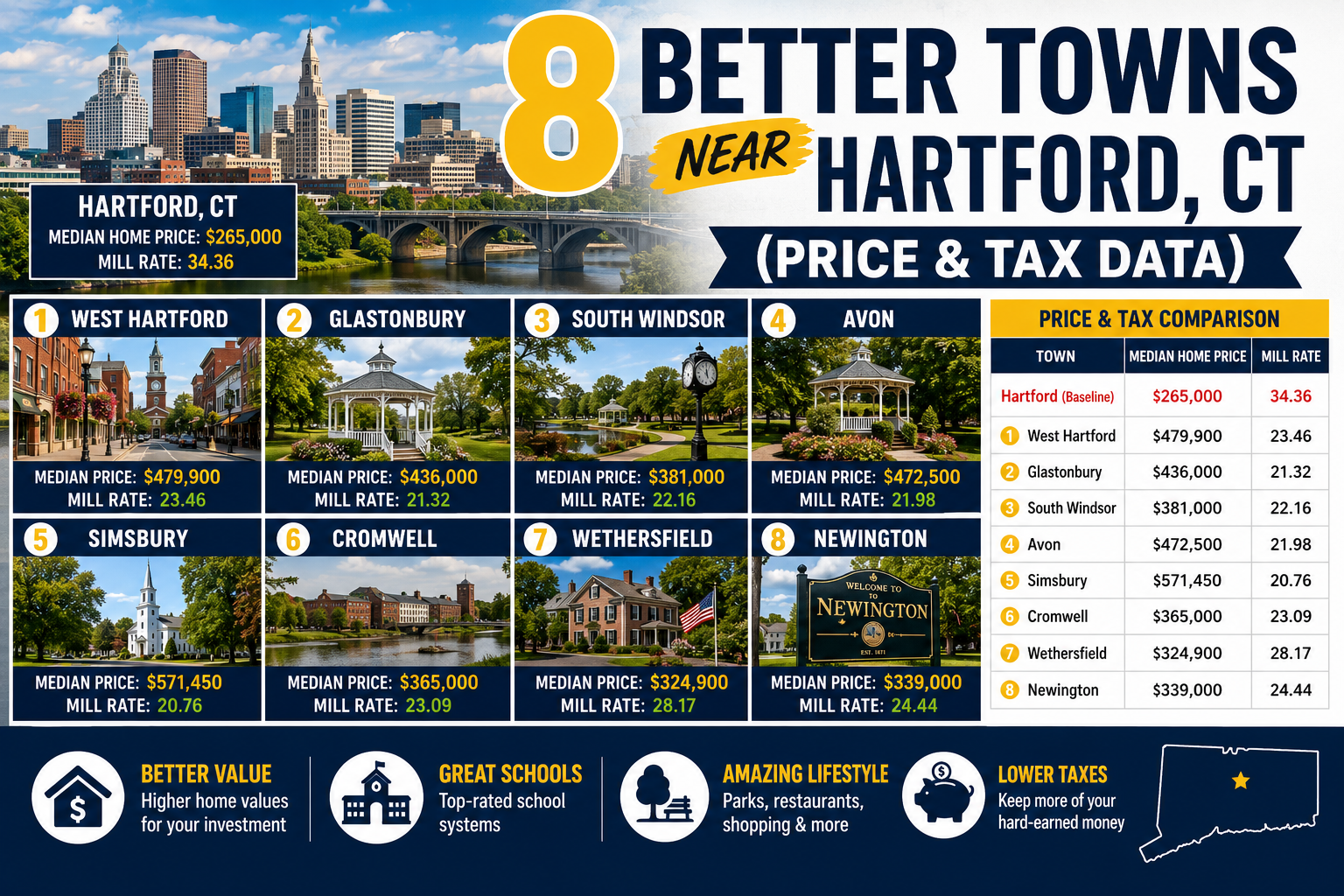
Buyer takeaway: Always check a town's mill rate before falling in love with a house. Two homes priced identically in different towns can have very different annual tax bills.

Con: Traffic and Commute Times

If you're along I-95 or I-84, traffic is a factor you need to plan around. Fairfield County commuters heading into New York deal with unpredictable highways — some days it's 90 minutes, other days it's closer to three and a half hours. Hartford-area drivers see their own rush hour backups, and snow or construction only adds to it.

Con: Weather Extremes

Nor'easters, multi-day rain stretches, occasional hurricanes — Connecticut weather keeps you on your toes. Most residents handle it fine, but shoveling, plowing, and icy roads are part of the deal.

Con: Crime in Certain Cities

Overall, Connecticut is a safe state, but like anywhere, certain cities — Hartford, Bridgeport, New Haven, Waterbury — run higher than the rural and suburban average. Suburban communities are generally very secure. The key is picking the right town for your priorities, and that's exactly where local expertise pays off.

Con: Density

Connecticut is the fourth most densely populated state in the country, which means smaller roads and homes closer together than you might be used to. Interestingly, some counties are actually losing population while others gain it — it's not a uniform growth story, and some towns feel quieter today than they did 15 years ago.

Con: Limited Tech-Startup Culture

If you're looking for a Silicon Valley-style tech scene, Connecticut isn't it. We have stable, established corporate employment, but fewer flashy new-economy opportunities. Some specialized fields are harder to break into here.


Addressing the Most Common Objections

"Connecticut is too expensive."
It can be, but not everywhere. Smart town selection — and checking that mill rate — makes a bigger difference than people realize.

"The homes are too old."
Many are, but "old" in Connecticut usually means well-built. A 1960s Connecticut ranch is the guy at the gym who still looks great for his age — solid bones, often better construction than newer builds.

"The process is too complicated."
It's more formal than some states, yes. Attorneys are common, but typically near the end of the transaction — your realtor handles the contract. Our paperwork is detailed, but that structure protects buyers and sellers far more than states where deals get sealed with a handshake.

What the Market Actually Looks Like Right Now

Heading through 2026, inventory is tight, demand is strong, and we're still seeing multiple offers across many price ranges. Average days on market statewide sits around 30, and well-priced homes are frequently going under contract the first weekend they're listed.

A fact most out-of-state buyers don't expect: Connecticut has an unusually high percentage of homes with full basements — something many southern and slab-built states simply don't offer. That's a real value-add in terms of usable square footage and storage.

We also have strict septic and well regulations. It can feel like a hurdle during a transaction, but it exists to protect buyers from costly surprises down the road.

Bottom Line

Connecticut is a balanced mix of affordability, opportunity, and quality of life, wrapped in a tax structure and traffic pattern that take a little getting used to. If you value stability, strong communities, and easy access to everything from beaches to mountains, it's genuinely hard to beat.

Ready to Make Your Move?

Whether you're relocating for a job, searching for the right town for your family, or just trying to understand how the Connecticut market really works, I'd rather you have real answers than guesses pulled from a random YouTube comment section.

Reach out and let's talk about your specific situation — your budget, your priorities, and which towns actually make sense for you.


Dave Jones, Broker/Owner
Dave Jones Realty
📞 203-910-2638
✉️ Dave@davejonesrealty.com
🌐 www.searchallcthomes.com

Jan. 20, 2026

3 CT Value Towns to Watch in 2026 (Part 2)


If you read Part 1, you already know the core problem with Connecticut real estate: the state isn't expensive because buyers are reckless. It's expensive because too many people are chasing the same towns at the same time. When demand stacks up in a few familiar places, competition gets ugly fast.

So today we're talking about Bristol, Naugatuck, and Torrington — three practical, undervalued towns I think have real momentum heading into 2026.

To be clear, that doesn't mean every house is going to double in value, and it doesn't mean you should waive inspections or make offers sight unseen. What it means is that demand tends to arrive earlier than expected in towns like these. Let's get into it.

Town #1: Bristol

Bristol is one of the most underrated full-life towns in Connecticut — and by full-life, I mean a town where people actually live their whole lives. Their jobs are there, they shop there, they eat at the restaurants, they use the parks, they have events and youth sports and everyday errands. Bristol functions. It doesn't rely on being charming or trendy. It relies on being usable — and in 2026, usability is more valuable than ever.

The insight buyers miss

A lot of buyers are tired. Tired of stretching just to say they live somewhere impressive. Tired of competing over the same house in the same "approved" town. They want a place where daily life works, and Bristol delivers that in a way people consistently underestimate.

Spillover demand

When surrounding towns get competitive, buyers expand their search radius and start asking, "Where can we still buy a normal house without it feeling insane?" Bristol catches that demand because it has real infrastructure — good roads, services, retail, and access that makes sense. It can absorb buyers without straining at the seams.

Here's the unexpected part: Bristol doesn't need to get hot online to get more competitive in real life. Most markets don't change because the internet says so. They change because buyers get priced out nearby, get practical, and practical buyers don't care whether a town is trendy — they care whether they can win a house and live the life they want.

Housing variety compounds demand

Bristol has options for first-time buyers, move-up buyers, downsizers, and even investors. When a town appeals to multiple buyer types at once, demand compounds — it's not riding one narrow wave, so pressure builds quietly.

Where buyers mess up

They treat Bristol as one experience. It isn't. There are pockets that feel suburban and quiet, pockets that feel busier and more active, and pockets where you need to be realistic. The smart buyer doesn't ask "Is Bristol good?" They ask "Which part of Bristol makes sense for me and how I live?"

And here's a boring-sounding insight that can make you money: normal houses are about to get more competitive than the fancy ones. A lot of people aren't chasing dream kitchens anymore — they're chasing a payment that lets them sleep at night, take their vacation, and afford a new car. That means ranches, capes, and colonials with good bones — even with a dated kitchen — could be the hottest inventory in town.

In prestige towns, buyers get emotional and overpay for the name. In towns like Bristol, buyers are more rational, and that tends to create steady appreciation rather than wild mood swings. Boring is profitable. Boring means stability and fewer dramatic swings.

Just remember the Connecticut basics on any home: oil heat versus gas, sewer versus septic, the age of the roof and windows, and whether it's siding or wood shake. The goal isn't to avoid every issue — it's to avoid the surprises. A dated kitchen is a project. A surprise foundation issue is a lifestyle change.

Town #2: Naugatuck

Naugatuck is one of the strongest value-corridor towns in all of Connecticut heading into 2026, and the reason is simple: access plus affordability creates demand whether people like it or not. (Credit where it's due — Mayor Hess is doing real work for the town.)

How buyers actually shop

They start with commute and lifestyle. Price comes in third — until price forces them to reorder their priorities. Naugatuck gets attractive the moment buyers realize they can still buy a house, still get where they need to go, and still live a pretty normal life without stretching to the breaking point. A nice yard, a solid house, good restaurants in town.

The thing most people don't say out loud is that Naugatuck demand rises when buyers get serious about budgeting. This is where buyers land when they stop saying "we want everything" and start saying "we want to be able to sleep at night." In a competitive market, that shift happens fast.

The power of winning

When people lose multiple offers, their psychology changes. They stop chasing perfection and start chasing progress — a house they can actually get. Naugatuck tends to attract buyers at exactly the moment they get serious.

And here's a 2026 insight: future flexibility is the new status symbol. People want a home that still works if their job changes, their family changes, or they need to support a parent later. Towns that offer access without a premium feel like a safer long-term bet, and they win those buyers.

Retention matters too. People buy in Naugatuck and stay — they build equity and don't churn quickly. That stability supports long-term value far better than hype-driven spikes ever could.

Like every town, Naugatuck's areas differ street to street, and density varies. Buyers who understand the nuance do very well; buyers who assume the town is one uniform experience end up frustrated. As always, do your own due diligence on safety through official sources, visit at different times of day, and talk to locals.

Town #3: Torrington

Torrington might have some of the best opportunity in all of Connecticut, and it's one of the value anchors of Litchfield County.

People love the idea of Litchfield County — the space, the charm, the lifestyle. But inventory is limited and prices climb fast in the towns everyone talks about, like Goshen, Washington, and Litchfield. Torrington is where buyers look when they want the county lifestyle without fighting over every listing.

A practical hub, not a postcard

Torrington has real infrastructure — shopping, services, healthcare, employment, and the ability to support day-to-day life. It's not pretending to be a postcard village. It's a practical hub, and practical hubs do well when the surrounding dream towns get out of reach.

Hybrid work changed the math

This matters more in 2026 than it did a few years ago. Buyers who no longer commute five days a week into New Haven are far more open to towns that offer more house and more land — and Torrington benefits directly. That trend isn't reversing anytime soon.

As a result, Torrington attracts multiple buyer types at once: first-time buyers, downsizers, investors, and people looking for more space. Whenever multiple groups compete for the same inventory, pressure builds — even without the town being trendy online.

The replacement-cost angle

Here's something buyers don't think about until they're in the middle of it: what would it cost to rebuild a house today? In much of Connecticut, that number is getting hard to justify. When replacement costs rise, well-kept existing homes hold value better — especially in towns where buyers can still afford to enter the market. Torrington benefits from that, because it remains a realistic entry point into a county people already know they want.

Torrington isn't for everybody, and that's fine. The mistake buyers make is assuming that because it's farther from certain job centers, it can't perform — which ignores how people actually live in 2026. Flexible schedules and remote days change the math. And like everywhere, micro-areas matter here: some neighborhoods feel very different from others, so buy intentionally.

How to Actually Use This

If you're serious about buying in Connecticut:

  • Pick two towns, not six. Some buyers come to us with a list spread across the entire state. Narrow it down.
  • Identify specific pockets, not vibes.
  • Run the numbers honestly — taxes, commute, and the maintenance the house actually needs.
  • Weigh lifestyle tradeoffs, not just list prices.
  • Stop waiting for certainty. The best day to buy was yesterday; the second best is today. Real estate rewards informed action, not perfect timing.

On schools: I don't rank schools — it's personal and it changes. Use tools like GreatSchools.org (we have them on our website too), then verify directly with the district.

On safety: do your own due diligence through official data, and visit any area you've shortlisted a few times across different hours. Connecticut is a patchwork — anyone telling you otherwise is oversimplifying.

Tying the Whole Series Together

If you're looking at all six towns across Part 1 and Part 2 wondering which is right for you — that's the real question. The best town is the one that matches your commute, your budget, and your tolerance for compromise, not the one that wins an argument at the barbecue.

  • Bristol works because it offers full-life functionality, catches spillover demand, and appeals to multiple buyer types.
  • Naugatuck works because its access is excellent, it's affordable, and it attracts serious buyers who are done chasing and ready to win.
  • Torrington works because it anchors value in a high-demand county with limited supply, and the hybrid-work shift keeps expanding its buyer pool.

None of these towns are flashy — and that's the point. Value almost never looks exciting before it becomes obvious.

Buyer and Seller Takeaways

If you're buying in a value-corridor town:

  • Buy the right pocket. In Bristol, Naugatuck, and Torrington alike, street-level differences decide whether you're happy — visit in person, more than once, at different hours.
  • Target solid-but-dated "normal" homes. As more buyers chase affordable payments over dream kitchens, that inventory is heating up, and cosmetics are the cheapest thing to fix.
  • Factor future flexibility into the decision — a home that still works if your job or family changes is worth more than a slightly nicer one that doesn't.
  • Run the Connecticut fundamentals every time: heat type, sewer vs. septic, roof, windows, siding. Inspections exist to kill surprises, not deals.

If you're selling in one of these towns:

  • Buyers are actively hunting value-corridor towns right now. Lead with functionality, commute access, and affordability rather than trying to sound trendy.
  • Solid-but-dated homes show and sell better with light cosmetic prep (paint, lighting) since so many buyers can't see past a dated kitchen.
  • In Litchfield County, position against the pricier "name" towns — plenty of buyers want the county without the bidding war, and that's your pool.

Want Help Narrowing It Down?

This is Part 2 — if you missed Part 1, go back and read it, since these towns move as part of a bigger Connecticut market story.

If you want help figuring out which of these six towns actually fits your life, reach out. My team can build you a short list based on your commute, your must-haves, and your not-so-importants, and help you avoid the pitfalls. A plan is what it takes to win in 2026.


Dave Jones Realty Dave Jones, Broker/Owner 📞 203-910-2638 ✉️ Dave@davejonesrealty.com 🌐 www.searchallcthomes.com

Aug. 12, 2025

Where the Train Meets the Good Life: Best CT Towns for NYC Commuters

Picture this: you’re sipping coffee on your porch, the birds are louder than the traffic, and yet—less than an hour later—you’re stepping off a train in Manhattan. That’s the Connecticut commuter magic.

I’m Dave Jones with Dave Jones Realty, and I’ve spent years helping buyers find that sweet spot between city access and Connecticut breathing room. Let’s talk about the towns that nail it.

Why These Towns Win for NYC Commuters

Not all suburbs are created equal. The best commuter towns give you:

  • Reasonable train times (because life’s too short for endless delays)

  • Neighborhood charm (think farmer’s markets, walkable downtowns, and actual parking)

  • Real estate value that doesn’t make your wallet weep

Standout CT Commuter Towns

Town Approx. Commute Price Snapshot The Vibe
Greenwich ~40 min (STAT) High-end homes, waterfront beauty, and a train schedule that’s your best friend.
Stamford ~50 min (STAT) A bustling downtown, top restaurants, and condos to colonials—variety is king.
Darien ~55 min (STAT) Peaceful streets, stellar schools, and a community feel you can’t fake.
New Canaan / Wilton ~1 hr (STAT) Postcard-pretty neighborhoods and just enough distance to fully exhale after work.

(Drop in your actual 2025 median price and YOY change for max SEO value.)

Market Notes for 2025

  • Inventory is tight—homes in these towns don’t sit for long.

  • Sellers are scoring multiple offers when they price right and prep well.

  • Buyers are leaning toward move-in-ready properties with easy train station access.

Insider Tip

If you’re house-hunting here, know your train line and your station. A difference of one stop can change your commute (and your home price) more than you think. That’s where a local pro with deep commuter-town experience—yours truly—makes all the difference.


Let’s Find Your “Perfectly Timed” Home

Whether you’re aiming for a 40-minute express ride or don’t mind the scenic hour-long commute, Connecticut has a town that fits. The key? Finding the right property before the bidding wars start.

Call me and let’s strategize before the train leaves the station:
📧 Dave@DaveJonesRealty.com
📞 203-910-2638


The commute is only as good as the home you’re coming back to. Let’s find you both.

Posted in CT Buyer Tips
Aug. 6, 2024

Spruce Up Your Backyard by Adding Interesting Features and Spaces In CT

Spruce Up Your Backyard by Adding Interesting Features and Spaces In Conneticut

With the warmer weather on the horizon, it is natural to turn your atttention to the backyard. The backyard has become central to the modern lifestyle and a functioning extension of the home. If you've been staring longingly at the latest home magazine display of the "perfect" backyard, your own may seem lacking. The good news is that with simple projects and a little cash and elbow grease, you can add interest and function to any yard.

  • Add Visual Interest - The first and easiest change is to add some interest; something that grabs the eye. This can be a simple fountain or a bright planter. Consider varying shapes and sizes as well.
  • Create New Spaces - Use simple, and inexpensive, materials to carve out a new space. Lumber can be stacked to create a raised surface for a couch or chair or arrange gravel in a section of the yard for a small bistro dining set.
  • Build a Planter - Buy a pre-made raised planter or container and add some bright seasonal flowers. Another idea is to use blocks to build your own. Stand-up planters filled with herbs or vegetables can also be placed to create a sense of well-being.

The key to an interesting and functional backyard is not the dollars but the way you use the space. By adding interesting features, space, and colors, you will build a yard that is inviting to guests and family alike. 

Aug. 5, 2024

Strategies for Selling a Home with Difficult Tenants In CT

Strategies for Selling a Home with Difficult Tenants In Conneticut

Selling a home can be challenging in any circumstances. Add a difficult tenant  to the mix and it becomes even more complex. While it would be nice to simply ask the tenant to leave. if there is a valid lease in place, this may not be possible. In addition any issues with the tenants must be disclosed to the potential buyers, further complicating the sale negotitations. The best option is to try and resolve any issues before starting the sales process.

Before doing anything, have a conversation with the tenants. Work to understand and mitigate any issues they may raise. For example, they may be concerned about having their lives disrupted during showings, and simply limiting access to the home may resolve the situation. Another option is to offer a buyout of the lease or other financial incentives for their cooperation or early departure.

If the situation is more severe, such as tenants casuing property damage or non-payment of rent, you may need to postpone the sale to address the tenant issues legally. Eviction is a lengthy and costly process so again offering a financial settlement may resolve the issue. If not, consult with an attorney for options and gudiance.

Finally, consider the timing of the sale and be sensitive to the tenants' needs. The end of the lease term is the best time to list, but also timing based on the end of a school year may help tenants with familes make the move. The best thing to do is collaborate with your tenants to find soultions that allow you all to move forward easily. If the tenant will stay in place ensure the change is smooth by introducing the new owner and putting them in the best position to have a successful transition. 

Aug. 2, 2024

Timeless Elegance - Creating an "Old Money" Look for your Home In CT

Timeless Elegance - Creating an "Old Money" Look for your Home In CT

There is a certain look and feel that just oozes "old money." These homes are graceful and elegant with interiors that are timeless and beautiful. Far from changing with each trend, these homes offer a sense of history that is warm and inviting. Fortunately, creating a classic, "old money" home does not require generational wealth. Anyone can create a home of understated luxury.

Quality Matters - Ditch the big-box stores that offer trendy furniture and accessories. Spend the time and money investing in pieces that will last and never go out of style. Hand-crafted wood, leather, and marble items can be found at high-end stores or antique dealers and will be worth the price in the long run.

Antiques and Vintage - Time spent in antique will pay off the those special finds that lend depth to your home. Wonderful kilim rugs or an aged mirror will add charm to any space.

Formal Rooms - Most floorplans offer separate "formal" dining and living spaces, yet many familes never use them for that purpose. Carving out these areas for special use does not need to involve a special event. Even a weekday family dinner is an occasion to stop and enjoy a beautiful room.

Most importantly, nothing is off limits. Add items that you love and enjoy. Far from a cluttered, shabby, old sense, this kind of style embraces the eclectic and timeless elegance of the "old money" crowd.

Aug. 1, 2024

First-Time Sellers - 5 Things You May Not Know In CT

First-Time Sellers - 5 Things You May Not Know

Selling your first home is an exciting journey that comes with its unique set of challenges and learning curves. Even if you feel well-prepared and have partnered with a skilled real estate professional, there are several aspects of the home-selling process that might surprise you. Here are essential insights to help you navigate your first home sale effectively. 

1. Pricing is Critical

Setting the right place for your home is crucial. Tempting as it may be to start with a high asking price, this can deter potential buyers and lead to a longer wait time in selling your home. Overpricing can necessitate significant price drops later on, which might give buyers the impression that there's something wrong with the property. A competitively priced home, on the other hand, is more likely to attract interest and sell quickly.

2. Preparation is Key

Before listing your home, take proactive steps by addressing repairs and any deferred maintenance. This not only enhances the appeal of your home but also prevents potential buyers from being put off by the work they would need to do. A well-maintained home generally sells faster and possibly for a higher price, as buyers perceive the care you've taken over time. 

3. Understanding Disclosure Practices

Transparency about your home's condition is generally expected in the home-selling process. Sellers often share details about the property's history and current state, which can include past repairs and any existing conditions. Providing this information can foster trust and facilitate a smoother transcation by ensuring buyers are well-informed about what they are purchasing. This approach is widely regarded as a best practice in real esate sales.

4. Anticipating Closing Costs

Understanding potential closing costs is crucial when selling your home. These costs can vary and might include fees such as title insurance transfer taxes, and other related expenses. It's important to be aware that these costs are part of the transcation and can sometimes be negotiated with the buyer. By familiarizing yourself with these potenial expenses, you can better estimate the net proceeds from your home sale and approach negotiations with more informed perspective.

5. Negotiations

Negotiating the sale term is more complex than just agreeing on a price. As a first-time seller, it's crucial to understand that nearly every aspect of the offer can be negotiated, including closing dates, contingencies, and even appliances included in the sale. Having a flexible strategy and an experienced real estate agent on your side can significantly benefit this process. Whether it's negotiating repair responsibilities or adjusting the closing timeline to fit your needs, being well-prepared to discuss these aspects can make a significant difference in achieving a favorable sale.

Navigating your first home sale can be daunting, but with the right information and guidance, you can successfully manage the transcation and look forward to your next steps in your real estate journey. Being informed about these key aspects will not only help you feel more confident but also position you for a successful and smooth sale. Remember, the best resource at your disposal is a knowledgeable real estate professional who can provide insights and expertise tailored to your specific situation.


July 31, 2024

What is a Home Stylist In Connecticut

What is a Home Stylist In Connecticut


Everyone has heard about home decorators or designers, but have you heard about home stylists? No, it's not just a fancy way of saying the same thing. A home stylist can transform your living space from ordinary to something extraordinary. A professional home stylist works with you on everything from simple aesthic changes to functional improvements. All are designed to create a home environment that is more beautiful and enhances lifestyle.

The first thing a professional home stylist will do is to understand your personality and goals for your home. They may bring style books to prompt converstaion. Then they will tour the space and take a mental inventory of the available décor and furniture. Everything from family heirlooms to treasured mementos can find room in your design. The goal is always to enhance your environment, without losing your personal style.

Home stylists can also help optimize space, declutter, build storage, or redecorate an entire room. Ideal for smaller projects, like a simple powder makeover or closet storage system, a home stylist can offer design advice that takes the do-it yourself project to another level.

A home stylist is well-versed in the latest trends and will work with you to incorporate these concepts into designs that complement your unique desires. They take the guesswork out of making changes by learning your tastes before they offer suggestions. They will also have recommendations for craftsmen and contractors who can transform the ideas into reality.

By using the items you already have a home stylist is a cost-effective option for updating your home without losing your personality in the process.

Posted in Events
July 30, 2024

Pricing Your Home for Sale When Everyone Else is Overpriced In Connecticut

Pricing Your Home for Sale When Everyone Else is Overpriced In Connecticut


The past few years have been exciting for home sellers. Not only were home prices historically high but buyers were well qualified and enjoying low interest rates. Today's housing market is dramatically different iin many areas of the country. If you are considering selling your home, you may be wondering how to select the correct price when it seems all the sellers around you are still overpricing theirs.

Working with your real estate agent, the first step is to look at recent sales, not just recent listings. You may find quickly that the homes are selling for quite a bit less than they are listed for. You also need to look at the trends. Are sales prices rising month-over-month or declining - and by how much? This can help you gauge if you should price higher than recent sales or lower.

In areas with few recent compareable sales, such as markets with many custom homes, it may benefit you to get a professional appraisal. This will cost a few hundred dollars and will give you a full picture of the local market. Appraisers will consider the unique features of your home vs the recent sales, as well as the sales prices. This can offer great information if you have a beautiful view, a large lot, or a remodeled home.

Finally, rely on the advice from an experienced agent. Don't be tempted to join the pack if they are overpriced. Be reasonable in your expectations. This will allow you to sell quickly and for the best price possible in the current market. 

July 29, 2024

Multi-Generational Living - A Path to Affordable Homeownership In Connecticut

Multi-Generational Living - A Path to Affordable Homeownership In Connecticut

In today's increasingly housing market, multi-genterational living has emerged as a practical solution for families seeking homeownership. By pooling resources and sharing living spaces, this lifestyles not only allows more people to achieve their dream of owning a home but also offers additional benefits in child and elder care. 

Here's how your family can leverage this strategy:

  • Financial Resources - Combine income, savings, and credit to build a strong financial foundation for purchase. By using all available resources, the family may be able to purchase a larger home than they could alone. 
  • Space Optimization - Multi-generational homes often feature separate living suites or accessory dwelling units (ADUs) or granny flats. Finding some kind of separation allows more flexibility and privacy.
  • Shared Responsibilities - Discuss the distribution of chores, costs, and maintenance tasks. Ths is not provides for a shared burden but removes the opportunity for disagreement or disappointment.
  • Estate Planning - Mult-generational homeownership can make inheritance strategies easier but can also create misunderstandings among siblings not involved in the living arrangements. Clear estate planning is essential.
  • Clear Expectations -  Be very clear about expectations for lifestyle. Discuss childcare, elder care, family time, etc.

The most important thing is to have open communication. Expectations on both sides can create challaenges without clear guidelines and conversations. The benefits of multi-generational living can be enormous.

Studies show that children thrive when in regular interaction with grandparents and the elderly live longer when surrounded by family. 

Prompted by the housing affordability crsis, multi-generational living is becoming more practical and desirable. With a little communication and planning, this offers families new options for owning a home.